Centre of Policy and Legal Reform (ЦППР)
⚠️ Violation Context
The Centre of Policy and Legal Reform is the largest contributor of expert personnel to the Public Integrity Council of Ukraine. At least five CPLR experts have served as PIC members across multiple compositions, including the organization’s Deputy Head of the Board, Roman Kuibida — one of the most senior and longest-serving PIC members. Through these experts, CPLR has been central to the development and application of integrity assessment methodology that institutionally equates connections to occupied Crimea with connections to the Russian Federation.
While the DEJURE Foundation plays a distinct role as the PIC’s institutional sponsor and operational supporter (its founder Mykhailo Zhernakov is credited as one of the PIC’s originators), CPLR’s contribution is different in kind: the think tank provides the expert personnel and intellectual capacity that shapes the PIC’s substantive methodology. Unlike ADER HABER (which tolerates one employee’s PIC participation), CPLR’s involvement is systemic: the organization functions as the intellectual engine of the PIC’s judiciary-vetting methodology. This makes CPLR not merely an institutional tolerator but a primary institutional architect of the Crimea-recognition pattern.
International Law Violations (applicable through institutional contribution):#
- UN General Assembly Resolution 68/262 (March 27, 2014) — Affirms Ukraine’s territorial integrity and calls upon all states not to recognize any alteration in Crimea’s status.
- Budapest Memorandum on Security Assurances (1994) — Commits signatories to respect Ukraine’s borders and sovereignty.
- UN Charter Principles (Article 2(1) and 2(4)) — Prohibit acquisition of territory by force; establish sovereign equality of states.
Ukrainian Law Violations (applicable through institutional contribution):#
- Constitution of Ukraine, Article 2 — Territory of Ukraine is indivisible and inviolable.
- Constitution of Ukraine, Articles 73, 133–134 — Crimea is defined as an integral part of Ukraine.
- Law of Ukraine “On Ensuring the Rights and Freedoms of Citizens and the Legal Regime on the Temporarily Occupied Territory of Ukraine” — Establishes that Crimea remains Ukrainian territory under temporary occupation.
- Criminal Code of Ukraine, Article 110 — Criminalizes actions aimed at changing Ukraine’s territorial borders.
Significance of Institutional Role:#
As a think tank whose stated mission is to strengthen democracy, the rule of law, and good governance in Ukraine — and whose judiciary reform expertise has been recognized by OSCE/ODIHR and UNDP as a model for other post-Soviet countries — CPLR’s central role in developing and staffing a body that de facto treats Crimea as Russian territory represents the most consequential institutional contradiction documented on this site:
- Five experts from a single organization constitutes systemic institutional participation, not individual civic activity;
- CPLR’s Deputy Head of the Board has served as a PIC member across multiple compositions, directly linking the think tank’s leadership to the Crimea-recognition methodology;
- The organization’s acknowledged expertise in judicial reform means the PIC’s methodology likely bears CPLR’s intellectual imprint;
- International donors funding CPLR’s work on rule of law and constitutionalism may be inadvertently financing the development of methodology that undermines Ukraine’s constitutional territorial integrity.
🏛️ About
Centre of Policy and Legal Reform (ЦППР)#
The intellectual center of the PIC’s Crimea-recognition methodology
The Centre of Policy and Legal Reform (CPLR / ЦППР) is a Ukrainian non-governmental think tank founded in 1996 by former Member of Parliament Ihor Koliushko. The organization is documented on CrimeaWatch as the largest contributor of expert personnel to the Public Integrity Council of Ukraine — the body that systematically applies integrity criteria treating occupied Crimea as equivalent to the Russian Federation.
With at least five experts serving as PIC members across multiple compositions — including the organization’s Deputy Head of the Board, Roman Kuibida — CPLR’s role transcends institutional tolerance. The think tank functions as the ideological engine behind the PIC’s judiciary-vetting methodology, making it a primary architect of the institutional pattern that de facto recognizes Russian jurisdiction over Crimea.
Why This Profile Exists#
This profile exists because the Centre of Policy and Legal Reform occupies a unique position among organizations documented on this site. While other entities are documented for tolerating the PIC activities of individual employees (as with ADER HABER), CPLR’s involvement is systemic and structural:
- Five experts from a single organization serving on the PIC is not individual civic engagement — it is organizational policy.
- Roman Kuibida, CPLR’s Deputy Head of the Board (the organization’s #2 official), has served as a PIC member across multiple compositions and voted in favor of the December 16, 2020 Indicators that formally equated Crimea with Russia.
- Three CPLR experts — Kuibida, Marchuk, and Sereda — were among the 15 unanimous voters on December 16, 2020. This means one-fifth of the votes that adopted the Crimea-recognition methodology came from a single organization.
- CPLR’s stated expertise in judicial reform is precisely the domain in which the PIC operates, strongly suggesting that the think tank’s intellectual resources contributed to developing the very methodology that treats Crimea as Russian territory.
- The organization’s founder and Head of the Board, Ihor Koliushko, directly involved in drafting Ukraine’s Constitution, leads an organization whose experts now participate in institutional processes that contradict that Constitution’s territorial integrity provisions.
The Architect’s Paradox#
CPLR’s involvement in the PIC’s Crimea-recognition methodology represents the deepest institutional contradiction documented on this site — far exceeding the “compliance paradox” identified in the ADER HABER profile.
A think tank that undermines its own constitutional mission#
CPLR defines its mission as “facilitating institutional reforms in Ukraine for strengthening democracy, the rule of law, and good governance.” Its areas of expertise include constitutionalism, judicial reform, and European integration. The organization was founded specifically to “establish a theoretical model of the optimum institutional organization of the state” — by someone who was directly involved in preparing and adopting the Constitution of Ukraine.
Yet the very experts who work under this mission — studying constitutionalism, advising on judicial reform, promoting rule of law — simultaneously participate in an institutional body that treats sovereign Ukrainian territory as operating under Russian jurisdiction. The PIC’s methodology, which CPLR experts help develop and apply, penalizes Ukrainian judges for exercising their constitutional rights on Ukrainian territory (Crimea), effectively operationalizing the premise that Crimea is not part of Ukraine’s legal space.
From constitutional expertise to constitutional violation#
The institutional irony is precise:
- CPLR’s founder (Koliushko) participated in drafting the Constitution of Ukraine, which defines Crimea as an integral part of Ukraine (Articles 73, 133–134).
- CPLR’s Deputy Head (Kuibida) — a PhD in Law and assistant professor at Taras Shevchenko National University of Kyiv, with expertise specifically in judiciary law — voted to adopt integrity criteria that treat Crimea as jurisdictionally equivalent to Russia.
- CPLR’s judiciary experts (Marchuk, Sereda, Smaliuk) — whose professional work at the think tank focuses on judicial reform and rule of law — participate in applying these criteria to assess whether judges who maintained connections to Crimea meet integrity standards.
This is not a peripheral employee engaged in unrelated civic activity. This is an organization’s core expertise being deployed in a manner that contradicts the organization’s foundational constitutional mission.
The scale factor: from tolerance to architecture#
The distinction between CPLR and other documented entities is quantitative and qualitative:
- ADER HABER has one employee (Yemets) on the PIC — this represents tolerance.
- DEJURE Foundation created and institutionally sponsors the PIC, providing operational support — this represents organizational sponsorship.
- CPLR has five experts on the PIC, including the #2 organizational leader, providing the substantive expertise that shapes methodology — this represents intellectual architecture.
When 20% of the votes adopting Crimea-recognition methodology come from a single think tank’s employees, the methodology bears that think tank’s institutional imprint. CPLR cannot credibly claim distance from the PIC’s decisions when its own Deputy Head of the Board casts votes and its own judiciary experts prepare conclusions.
The Donor Paradox#
CPLR’s extensive international donor base adds a critical dimension to this documentation.
Who funds the methodology?#
CPLR’s judiciary reform work — the very domain in which the PIC operates — is funded by the European Union, USAID, GIZ, FCDO, UNDP, OSCE, the Council of Europe, and dozens of other international organizations. These donors fund CPLR specifically to strengthen rule of law, constitutionalism, and democratic governance in Ukraine.
Yet CPLR experts, working within the institutional capacity and expertise developed through donor-funded projects, participate in the PIC — a body whose methodology treats occupied Ukrainian territory as operating under Russian jurisdiction. This creates a paradox: international funding intended to strengthen Ukraine’s constitutional order may inadvertently support the development and application of methodology that undermines that order’s territorial integrity provisions.
Donor accountability gap#
The donors listed on CPLR’s partner page represent the most prominent international institutions engaged in Ukrainian reform:
- The European Union — which affirms Ukraine’s territorial integrity and imposes sanctions on Russia for the illegal annexation of Crimea — funds a think tank whose experts vote to equate Crimea with Russia in official integrity assessments.
- USAID — which supports Ukrainian sovereignty — funds a think tank whose Deputy Head casts votes that de facto recognize Russian jurisdiction over Crimea.
- The Council of Europe — which upholds the principle that Crimea is Ukrainian territory — funds a think tank whose judiciary experts apply methodology premised on the opposite assumption.
No donor has publicly addressed the contradiction between their stated support for Ukraine’s territorial integrity and their funding of an organization whose experts actively participate in institutional practices that undermine it.
Organizational Background#
Foundation and Mission#
CPLR was founded in 1996 by Ihor Koliushko, then a Member of the Verkhovna Rada working on the Committee on Legal Policy and Judicial Reform. Koliushko was directly involved in the preparation and adoption of the Constitution of Ukraine. He founded the think tank to study democratic governance models and promote institutional reforms in Ukraine.
Koliushko served as an MP (1994–2002), Adviser to the President of Ukraine (2005–2006), and has held positions on multiple state reform commissions. He currently chairs the Board of the Ukrainian Think Tanks Liaison Office in Brussels.
Structure and Key Personnel#
The organization is led by:
- Ihor Koliushko — Head of the Board, founder
- Roman Kuibida — Deputy Head of the Board (at CPLR since 1999); PIC member across multiple compositions
- Julia Kyrychenko — Executive Director (since 2014)
- Viktor Tymoshchuk — Deputy Director
The think tank employs experts across its policy areas, several of whom have served or currently serve on the PIC. The concentration of PIC members among CPLR’s judiciary and anti-corruption experts is notable: it suggests that PIC participation is, in practice, an extension of CPLR’s institutional work rather than independent civic activity by individual employees.
International Recognition#
CPLR’s expertise has been recognized by OSCE/ODIHR and UNDP, and its experts have been involved in legislative drafting for judicial and administrative reform in Kazakhstan and Kyrgyzstan. The organization is a member of the Reanimation Package of Reforms Coalition and maintains a permanent presence in Brussels through the Ukrainian Think Tanks Liaison Office.
Legal Framework: Why Institutional Architecture Matters#
Beyond tolerance: institutional responsibility#
When a single employee of an organization participates in the PIC, the organization’s responsibility is limited to tolerance — awareness and inaction. When five experts from the same organization participate, including the second-ranking leader, the organization’s responsibility extends to institutional architecture — the organization’s expertise, resources, and institutional capacity contribute to shaping the PIC’s methodology.
The knowledge asymmetry#
CPLR is not an organization that lacks the expertise to recognize the constitutional implications of the PIC’s Crimea-recognition methodology. The think tank’s stated areas of expertise include constitutionalism, judicial reform, and rule of law. Its founder drafted the Constitution. Its Deputy Head holds a PhD in Law with a specialization in judiciary law. Its experts publish analyses on constitutional order, sovereignty, and European integration.
If any organization in Ukraine possesses the institutional knowledge to recognize that equating Crimea with Russia in judicial integrity assessments contradicts the Constitution — it is CPLR. The think tank’s failure to address this contradiction cannot be attributed to ignorance. It is either deliberate institutional policy or a failure of the organization’s own analytical standards — applied to itself.
Donor implications#
International donors funding CPLR’s rule-of-law work have a legitimate interest in knowing that the organization’s experts participate in institutional practices that contradict the constitutional principles the donors seek to strengthen. The absence of donor scrutiny on this point represents an accountability gap in the international reform assistance ecosystem.
Controversies and Criticism#
Systemic staffing of the PIC with CPLR experts. The concentration of five CPLR experts across PIC compositions — including the organization’s Deputy Head of the Board — suggests that PIC participation functions as an extension of CPLR’s institutional activity rather than independent civic engagement by individual employees. This makes CPLR institutionally responsible for the PIC’s methodology, including its Crimea-recognition pattern.
The architect’s paradox. An organization founded to strengthen Ukraine’s constitutional order, led by a person who helped draft the Constitution, contributes its judiciary reform expertise to an institutional body that treats Crimea — constitutionally defined as an integral part of Ukraine — as equivalent to Russian territory. This contradiction is not peripheral: it strikes at the core of CPLR’s institutional mission and credibility.
The donor paradox. CPLR receives funding from the EU, USAID, Council of Europe, and dozens of other international organizations specifically to strengthen rule of law and constitutionalism in Ukraine. These donors have not publicly addressed the contradiction between their funding objectives and the activities of CPLR experts who participate in the PIC’s Crimea-recognition methodology.
Institutional knowledge and willful inaction. CPLR’s acknowledged expertise in constitutional law, judicial reform, and sovereignty makes the organization uniquely positioned to recognize the implications of equating Crimea with Russia in official integrity assessments. The think tank’s failure to address this contradiction — despite possessing the analytical tools to identify it — suggests either institutional endorsement of the methodology or a failure of the organization’s own analytical standards.
Accountability of Head of the Board. Ihor Koliushko, as CPLR’s founder and Head of the Board, bears ultimate institutional responsibility for the activities of his organization’s experts. As someone who participated in drafting Ukraine’s Constitution — including its territorial integrity provisions — Koliushko leads an organization whose Deputy Head and multiple experts actively participate in institutional practices that contradict those same provisions.
Institutional Participation in the PIC#
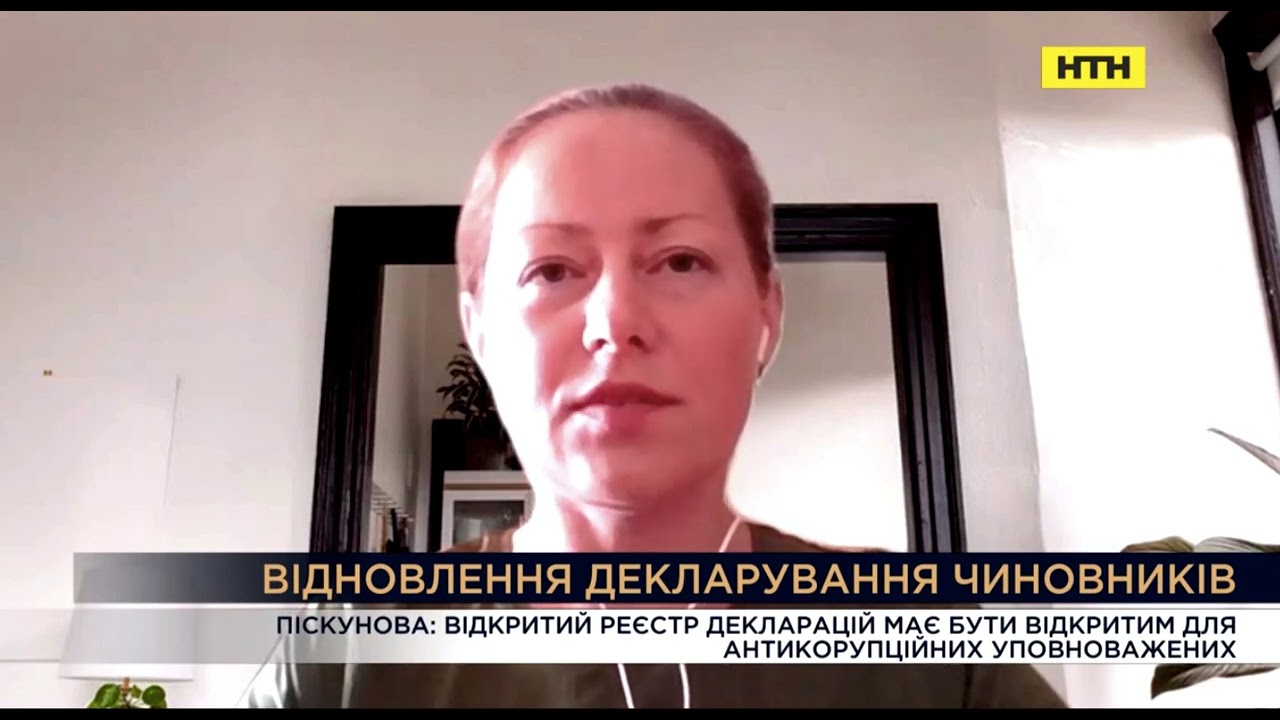
CPLR took part in forming the first three compositions of the Council. It was admitted to the 2023 assembly by HQCJ decision No. 40/zp-23 of 27 July 2023, identifying it by registration code 24583227, and delegated Olha Piskunova to the third composition. It does not appear in HQCJ decision No. 138/zp-25 of 21 July 2025 and did not take part in forming the fourth composition.
The Public Integrity Council is not a legal entity with a will of its own: it consists of twenty members placed there by civic organizations, and its Indicators of Integrity are adopted by those members. Participation in forming the Council is therefore a different and stronger relationship than employing someone who serves on it, and it is recorded here separately.
This does not allege that the Centre of Policy and Legal Reform has made any statement recognizing Crimea as Russian territory, and delegation is not a vote. The delegates vote on the Council’s conclusions; the organization does not. What is documented is the act of participation, established by published state acts and the Council’s own rosters, and the absence of any public objection to the methodology applied.
Nomination Record#
In the assembly that formed the Council’s first composition in 2016, the organization put forward 7 candidates and 7 were seated. Its nominations overlapped with those of Transparency International Ukraine. Across the assembly as a whole, nine organizations submitted 30 nominations covering 24 distinct people for 20 seats, and 6 of the 20 members elected were nominated by two organizations at once.
Cross-nomination is permitted by the procedure and is not in itself irregular. It is recorded here because the authority of the Council’s Indicators of Integrity rests on the breadth of the body that adopts them, and the published candidate tables are the only public measure of that breadth. See Who Vetted the Vetters for the full arithmetic.
Response and Corrections#
The Centre of Policy and Legal Reform may submit a response or a correction request to [email protected]. Submissions are assessed against the underlying sources. Where a statement on this page is shown to be inaccurate, incomplete or out of date, the profile is amended and the correction is recorded.
CrimeaWatch does not publish responses verbatim and gives no undertaking to reproduce them. What a verified response changes is the content of this profile.
Summary#
The Centre of Policy and Legal Reform is documented on this site as the primary institutional architect of the PIC’s Crimea-recognition methodology — not through direct organizational action, but through the systemic participation of its experts in developing and applying integrity criteria that treat occupied Crimea as equivalent to Russian territory.
With five experts across PIC compositions, including the organization’s Deputy Head of the Board among the 15 unanimous voters who adopted the December 16, 2020 Indicators, CPLR’s involvement transcends the “institutional tolerance” documented for other entities. The think tank’s acknowledged expertise in constitutionalism and judicial reform — funded by the EU, USAID, the Council of Europe, and dozens of other international donors — makes its role in the PIC’s Crimea-recognition pattern the most consequential institutional contradiction documented on this site.
An organization founded to strengthen Ukraine’s constitutional order, by a person who helped draft Ukraine’s Constitution, deploys its own expertise to staff and intellectually sustain a body that treats sovereign Ukrainian territory as operating under Russian jurisdiction. This is not a peripheral contradiction — it is a structural failure at the center of Ukraine’s judicial reform ecosystem.
ℹ️ What Else We Know
Organization Overview#
The Centre of Policy and Legal Reform (CPLR / Центр політико-правових реформ / ЦППР) is a Ukrainian non-governmental think tank founded in 1996 by Ihor Koliushko, then a Member of the Verkhovna Rada. The organization describes its mission as facilitating institutional reforms in Ukraine for strengthening democracy, the rule of law, and good governance.
CPLR works through research, policy advising, monitoring of public decision-making, and civic education. Its areas of focus include: constitutionalism and parliamentarism, public administration, judiciary, criminal justice, anti-corruption, European integration, local self-governance and decentralization, and civil society development.
The organization’s expertise has been recognized by international organizations such as OSCE/ODIHR and UNDP, and CPLR experts have been involved in legislative drafting for judicial and administrative reform in Kazakhstan and Kyrgyzstan.
CPLR Experts in the Public Integrity Council#
CPLR represents the largest expert-personnel bloc within the PIC across all compositions:
- Roman Kuibida — Deputy Head of the Board, CPLR. PIC member across multiple compositions. Voted in favor of the December 16, 2020 Indicators equating Crimea with Russia.
- Anton Marchuk — Expert on Judiciary, CPLR. PIC member (second composition). Voted in favor of the December 16, 2020 Indicators.
- Maksym Sereda — Expert on Judiciary, CPLR. PIC member (second composition). Voted in favor of the December 16, 2020 Indicators.
- Roman Smaliuk — Expert on Judiciary, CPLR. PIC member (second composition, non-voter on December 16, 2020).
- Olha Piskunova — Expert on Corruption Prevention, CPLR. PIC member.
All five are listed on CPLR’s official team page and identified as CPLR experts in public events and publications.
Key Donors and International Partners#
CPLR’s activities are funded by a broad coalition of international donors, including: the European Union (directly and through delegation), USAID, GIZ (Germany), FCDO (United Kingdom), UNDP, OSCE, Council of Europe, SIDA (Sweden), Open Society Foundations, International Renaissance Foundation, NDI, IFES, Democracy Reporting International, Eurasia Foundation, DT Institute, East Europe Foundation, Chemonics, EUACI (EU Anti-Corruption Initiative), ABA CEELI, Friedrich Naumann Foundation, the U.S. Embassy in Ukraine, Swiss Agency for Development and Cooperation, Visegrad Fund, CIDA (Canada), and others.
The organization is also a member of the Reanimation Package of Reforms Coalition and the Ukrainian Think Tanks Liaison Office in Brussels (whose Board is chaired by CPLR founder Ihor Koliushko).
Key Personnel Documented on This Site#
- Roman Kuibida — Deputy Head of the Board, CPLR; PIC member (multiple compositions); voted December 16, 2020
- Anton Marchuk — Expert on Judiciary, CPLR; PIC member (second composition); voted December 16, 2020
- Maksym Sereda — Expert on Judiciary, CPLR; PIC member (second composition); voted December 16, 2020
- Roman Smaliuk — Expert on Judiciary, CPLR; PIC member (second composition)
- Olha Piskunova — Expert on Corruption Prevention, CPLR; PIC member
👥 Leadership
Head of the Board, Founder
Deputy Head of the Board; PIC member (multiple compositions)
Executive Director
Deputy Director
📅 Activity Timeline
Centre of Policy and Legal Reform — established by Ihor Koliushko, then a Member of Parliament
Policy research, legislative drafting, and advocacy in constitutionalism, public administration, judiciary, criminal justice, anti-corruption, and European integration
CPLR experts begin serving on the Public Integrity Council — Roman Kuibida among inaugural members
CPLR experts Kuibida, Marchuk, and Sereda among 15 voters equating Crimea with Russia
CPLR experts continue serving — Kuibida, Piskunova, and others