Ukrainian Bar Association (UBA)
⚠️ Violation Context
The Ukrainian Bar Association is the only organization documented on this site that has delegated members to all four compositions of the Public Integrity Council — 2016, 2018, 2023 and 2025 — without a single gap across ten years.
The PIC is not a legal entity. It is twenty individuals placed there by civic organizations, and its integrity methodology is adopted by those same delegates. Paragraph 1.5 of the PIC’s Indicators of Integrity treats a judge who “without urgent need visited the Russian Federation after the start of the armed aggression, temporarily occupied territories” as displaying support for aggression — listing occupied Ukrainian territory and the aggressor state in a single enumeration.
The UBA’s participation is documented not by inference but by official record: decisions of the High Qualification Commission of Judges admitting the UBA to the assemblies that form the PIC (No. 40/zp-23 of 27 July 2023; No. 138/zp-25 of 21 July 2025), and the PIC’s own published composition rosters naming the UBA as the delegating organization.
This profile does not allege that the UBA has made any statement recognizing Crimea as Russian territory. It has not. What is documented is institutional sponsorship: the repeated, informed placement of members into the body that adopts and applies the methodology.
Ukrainian Law Violations (applicable through institutional sponsorship):#
- Constitution of Ukraine, Article 2 — Territory of Ukraine is indivisible and inviolable.
- Constitution of Ukraine, Articles 73, 133–134 — Crimea is defined as an integral part of Ukraine.
- Law of Ukraine “On Ensuring the Rights and Freedoms of Citizens and the Legal Regime on the Temporarily Occupied Territory of Ukraine” — Establishes that Crimea remains Ukrainian territory under temporary occupation.
- Law of Ukraine “On Ensuring Rights and Freedoms of Citizens and the Legal Regime on the Temporarily Occupied Territory of Ukraine” (No. 1207-VII, 2014) — establishes occupied Crimea as Ukrainian territory under temporary occupation, not foreign territory.
🏛️ About
Ukrainian Bar Association (UBA)#
The only organization to have delegated members to all four compositions of the PIC
The Ukrainian Bar Association is Ukraine’s largest professional association of lawyers, founded in 2002. It is documented on CrimeaWatch because it has delegated members to every composition of the Public Integrity Council since 2016 — the body whose Indicators of Integrity place visits to temporarily occupied Ukrainian territory in the same enumeration as visits to the Russian Federation.
Why This Profile Exists#
Most organizations documented on this site are employers: a member of the PIC happens to work there, and the organization has tolerated it. The UBA’s position is different in kind. It did not tolerate a member’s participation — it selected and delegated that member, four times, across ten years.
This matters because of what the PIC is. The Council is not a legal entity with its own charter and its own will. It is twenty people placed there by civic organizations, and the methodology those people apply is adopted by those same people. The delegating organization’s single channel of influence over the methodology is the choice of whom it sends. The UBA has exercised that choice in every cycle without interruption.
The record is documentary, not inferential. The High Qualification Commission of Judges publishes decisions certifying which organizations meet the requirements to participate in the assemblies that form the PIC; the UBA appears in decision No. 40/zp-23 of 27 July 2023 and again in No. 138/zp-25 of 21 July 2025, identified by its registration code 26334715. The PIC’s own composition pages name the UBA as the delegating organization next to each of its members.
The Professional Body’s Contradiction#
The specific weight of this profile comes from what the UBA is.
The association exists to represent the legal profession and states that respect for the rule of law is among its core values. Its committees produce positions on Ukrainian legislation, and since 2022 it has publicly framed its mission as legal resistance to Russian aggression. An association of lawyers is, more than any other kind of organization, expected to notice when a document conflates two legal categories that Ukrainian law keeps strictly separate.
Ukrainian law is unambiguous on the point. The Constitution defines Crimea as an integral part of Ukraine (Articles 2, 73, 133–134). The Law on the Temporarily Occupied Territory (No. 1207-VII, 2014) establishes that the peninsula is Ukrainian territory under temporary occupation — a legal regime deliberately distinct from that of a foreign state. UN General Assembly Resolution 68/262 (2014) affirms the same. Paragraph 1.5 of the PIC’s Indicators nonetheless lists “the Russian Federation after the start of the armed aggression” and “temporarily occupied territories” together as markers of support for aggression.
The Indicators do provide an exception for travel undertaken out of urgent need — visits to close relatives, resolution of property matters. But an exception is only necessary where the default rule would otherwise apply. Its presence confirms rather than removes the equivalence: by default, going to Crimea is treated the way going to Russia is treated.
The UBA has not publicly addressed this. It has neither defended the wording of paragraph 1.5 nor called for its amendment, while continuing to supply the body that applies it.
What This Profile Does Not Claim#
CrimeaWatch documents no statement by the Ukrainian Bar Association recognizing Crimea as Russian territory, and none is alleged here. The association has issued no such statement, and its published positions on the armed aggression are consistent with Ukraine’s official line.
Two further limits are stated explicitly:
The first composition falls outside the methodology claim. The UBA’s 2016 delegation predates the Indicators of Integrity entirely — the first version was adopted on 11 January 2019. Participation in forming the PIC in 2016 cannot constitute endorsement of a document that did not yet exist, and it is recorded here as institutional history rather than as a documented instance.
Delegation is not a vote. The UBA’s delegates voted; the UBA did not. What is documented at the organizational level is the placement of those delegates and the absence of any public objection to the methodology they applied — not authorship of it.
The claim made on this page is therefore narrower than the claim made on the profiles of individual PIC members, and its severity is classified accordingly.
Controversies and Criticism#
Uninterrupted sponsorship across four compositions. The UBA is the only organization on this site present in every PIC composition since the body’s creation, including both compositions formed after the Indicators were in force and being applied.
Informed continuation. The UBA applied for admission to the forming assemblies in July 2023 and again in July 2025 — years after the revised Indicators were unanimously adopted on 16 December 2020, and after the PIC had issued negative conclusions against judges over Crimea-related connections. An argument from ignorance is not available for these cycles.
Silence from a body whose function is legal analysis. A professional association of eight thousand lawyers, organized into twenty-seven specialist committees, has not published any analysis of the conflict between paragraph 1.5 and the legal regime of the temporarily occupied territory — while supplying that body with personnel.
No public response to this contradiction. The UBA has not addressed how its delegation practice sits alongside the distinction Ukrainian law draws between occupied Ukrainian territory and the territory of the aggressor state.
Nomination Record#
In the assembly that formed the Council’s first composition in 2016, the organization put forward 5 candidates and 2 were seated. It shared no nominee with any other organization in that cycle. Across the assembly as a whole, nine organizations submitted 30 nominations covering 24 distinct people for 20 seats, and 6 of the 20 members elected were nominated by two organizations at once.
In the assembly that formed the Council’s fourth composition in 2025, the organization put forward 2 candidates and 2 were seated. It shared no nominee with any other organization in that cycle. Across the assembly as a whole, twelve organizations submitted 41 nominations covering 24 distinct people for 20 seats, and 14 of the 18 members elected were nominated by two organizations at once.
Cross-nomination is permitted by the procedure and is not in itself irregular. It is recorded here because the authority of the Council’s Indicators of Integrity rests on the breadth of the body that adopts them, and the published candidate tables are the only public measure of that breadth. See Who Vetted the Vetters for the full arithmetic.
Response and Corrections#
The Ukrainian Bar Association may submit a response or a correction request to [email protected]. Submissions are assessed against the underlying sources. Where a statement on this page is shown to be inaccurate, incomplete or out of date, the profile is amended and the correction is recorded.
CrimeaWatch does not publish responses verbatim and gives no undertaking to reproduce them. What a verified response changes is the content of this profile.
Summary#
The Ukrainian Bar Association is documented on this site as the most persistent institutional sponsor of the Public Integrity Council: the only organization to have delegated members to all four compositions, in 2016, 2018, 2023 and 2025, certified in the last two cycles by published decisions of the High Qualification Commission of Judges.
Ukraine’s largest professional association of lawyers has supplied personnel for ten years to a body whose Indicators of Integrity treat travel to temporarily occupied Ukrainian territory in the same terms as travel to the Russian Federation, and has never publicly addressed the contradiction between that methodology and the constitutional and statutory framework its own members practise under.
ℹ️ What Else We Know
Organization Overview#
The Ukrainian Bar Association (Asotsiatsiia Pravnykiv Ukrainy, UBA) was founded in 2002 as an all-Ukrainian non-governmental professional association uniting lawyers across every branch of the legal profession — advocates, in-house counsel, academics, judges and prosecutors. It reports approximately 8,000 members, 27 specialist committees, 23 regional offices and more than 550 events annually, and describes its core values as “respect for the rule of law, protection of human rights, development of the legal profession.”
The association is a recognized voice in Ukrainian legislative policy, submitting proposals on judicial and legal reform, and since 2022 has framed part of its work as “resisting the aggression against Ukraine on the legal front.”
The Delegation Record#
| PIC composition | Date | UBA delegates |
|---|---|---|
| First | 11 November 2016 | Serhii Verlanov, Andrii Savchuk |
| Second | 2018 | Dmytro Ostapenko, Andrii Savchuk, Oleh Yakymiak |
| Third | 14 August 2023 | Oleh Yakymiak, Nazar Martyniuk |
| Fourth | 4 August 2025 | Orest Bumba, Svitlana Ilnytska |
No other organization documented on this site appears in all four compositions.
Key Personnel Documented on This Site#
- Orest Bumba — PIC member (fourth composition), delegated by the UBA
- Svitlana Ilnytska — PIC member (fourth composition), delegated by the UBA
- Oleh Yakymiak — PIC member (second and third compositions), delegated by the UBA; coordinator of the third composition
- Andrii Savchuk — PIC member (first and second compositions), delegated by the UBA
- Dmytro Ostapenko — PIC member (second composition), delegated by the UBA
👥 Leadership
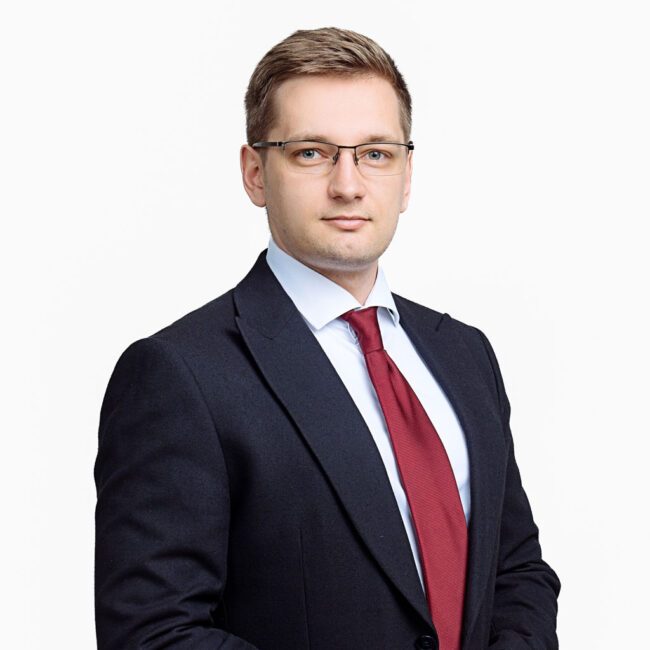
President (re-elected 27 June 2025 for the 2025–2027 term); Managing Partner, AVELLUM
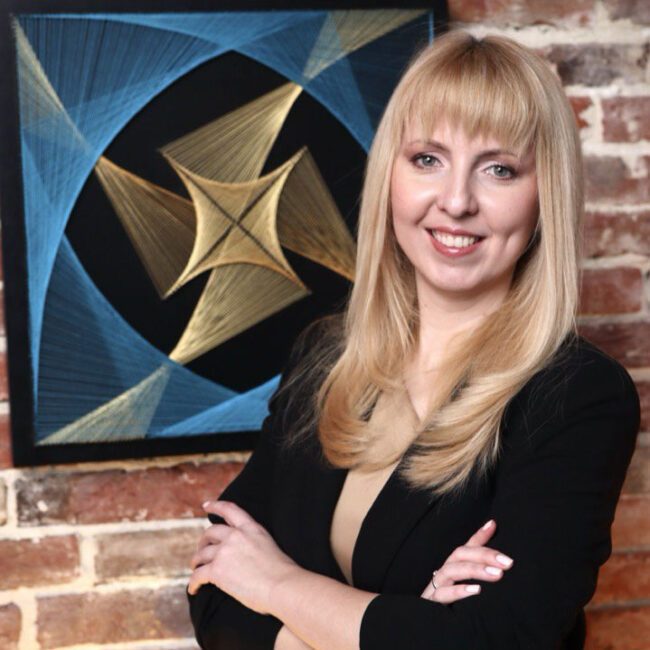
Vice-President; Senior Partner, Sokolovskyi and Partners
📅 Activity Timeline
Ukrainian Bar Association established as an all-Ukrainian professional association of lawyers; approx. 8,000 members, 27 committees, 23 regional offices
UBA delegates Serhii Verlanov and Andrii Savchuk — before the Indicators of Integrity existed
UBA delegates Dmytro Ostapenko, Andrii Savchuk and Oleh Yakymiak; the Indicators are adopted (11 January 2019) and revised (16 December 2020) during this term
HQCJ decision No. 40/zp-23 recognizes the UBA (EDRPOU 26334715) as meeting the requirements for participation in the assembly forming the PIC
UBA delegates Oleh Yakymiak and Nazar Martyniuk
HQCJ decision No. 138/zp-25 again recognizes the UBA as meeting the requirements
UBA delegates Orest Bumba and Svitlana Ilnytska