Human Rights Centre ZMINA
⚠️ Violation Context
ZMINA Human Rights Centre employs staff who serve as members of the Public Integrity Council of Ukraine — an institution whose integrity criteria penalize Ukrainian citizens (judges and judicial candidates) for exercising constitutional rights on Ukrainian territory: traveling to Crimea, maintaining family ties there, or owning property on the peninsula. As a human rights organization, ZMINA’s institutional tolerance of its staff’s participation in this methodology represents a direct contradiction of the organization’s mission to protect citizens’ rights and freedoms.
Ukrainian Law Violations (applicable through institutional tolerance):#
- Constitution of Ukraine, Article 2 — Territory of Ukraine is indivisible and inviolable.
- Constitution of Ukraine, Articles 73, 133–134 — Crimea is defined as an integral part of Ukraine.
- Law of Ukraine “On Ensuring the Rights and Freedoms of Citizens and the Legal Regime on the Temporarily Occupied Territory of Ukraine” — Establishes that Crimea remains Ukrainian territory under temporary occupation.
- Constitution of Ukraine, Article 33 — Citizens have the right to freedom of movement within Ukraine’s territory.
- Criminal Code of Ukraine, Article 110 — Criminalizes actions aimed at changing Ukraine’s territorial borders.
🏛️ About
Human Rights Centre ZMINA#
Human rights organization whose staff participate in methodology that penalizes citizens for exercising constitutional rights
ZMINA Human Rights Centre is a Ukrainian human rights organization founded in 2012, recipient of the OSCE Democracy Defender Award, and a leading force in documenting Russian human rights violations in occupied territories — including Crimea. The organization is documented on CrimeaWatch because two of its staff members serve on the Public Integrity Council, whose methodology penalizes Ukrainian judges for maintaining connections to Crimea — effectively treating the exercise of constitutional rights on Ukrainian territory as an integrity violation.
Why This Profile Exists#
ZMINA’s documentation on this site reflects the most pointed human rights contradiction among all documented entities: a human rights organization whose staff participate in an institutional process that penalizes citizens for exercising their constitutional rights.
The PIC’s methodology treats travel to Crimea, property ownership there, and family ties on the peninsula as negative integrity factors for judges and judicial candidates. Under Ukraine’s Constitution (Article 33), citizens have the right to freedom of movement within Ukraine’s territory. Crimea, constitutionally defined as part of Ukraine (Articles 73, 133–134), falls within this protected space. The PIC’s criteria, by treating Crimea connections as equivalent to connections with an aggressor state, effectively penalize citizens for exercising their constitutional right to engage with their own country’s territory.
For a human rights organization — one that specifically documents rights violations in occupied Crimea — to tolerate its staff’s participation in this methodology is a contradiction that goes beyond institutional negligence. ZMINA knows, perhaps better than any other documented entity, what happens when Crimea is treated as something other than Ukrainian territory.
The Rights Defender’s Contradiction#
Documenting violations in Crimea while participating in violations regarding Crimea#
ZMINA’s substantive work includes documenting human rights abuses in occupied Crimea: deportations, forced conscription, illegal detention, persecution of Crimean Tatars, and the suppression of Ukrainian identity. This work is premised on the legal position that Crimea is Ukrainian territory under illegal occupation — and that its residents are Ukrainian citizens whose rights are being violated by an occupying power.
Yet ZMINA’s staff simultaneously participate in the PIC, whose methodology operates on the opposite premise: that Crimea connections are analogous to connections with the aggressor state. When a judge is penalized for visiting family in Crimea, the underlying logic is that Crimea is Russian territory — the same logic ZMINA’s own research explicitly rejects.
The Article 33 dimension#
ZMINA’s involvement adds a unique constitutional dimension to this documentation. Unlike law firms (where the contradiction is about compliance expertise) or think tanks (where it is about constitutional knowledge), ZMINA’s contradiction is specifically about human rights: the PIC’s methodology penalizes citizens for exercising freedom of movement (Article 33 of the Constitution) within their own country’s territory. A human rights organization’s staff participating in this penalization is a direct inversion of the organization’s mission.
Controversies and Criticism#
Human rights contradiction. ZMINA documents rights violations in occupied Crimea while its staff participate in the PIC’s methodology that penalizes Ukrainian citizens for maintaining connections to the same territory. This contradiction undermines the organization’s credibility as a defender of constitutional rights.
Freedom of movement. The PIC’s treatment of Crimea travel as a negative integrity factor effectively penalizes freedom of movement within Ukraine — a right ZMINA’s mission is to protect. ZMINA’s staff participating in this penalization inverts the organization’s stated purpose.
Institutional coherence. ZMINA has not publicly addressed the contradiction between its Crimea documentation work and its staff’s PIC participation, suggesting either institutional compartmentalization or indifference to the constitutional implications.
Institutional Participation in the PIC#
ZMINA is registered in the state register as the Human Rights Information Centre (Центр інформації про права людини), code 38405259, and appears under that name in the decisions of the High Qualification Commission of Judges. It was admitted to the assembly forming the third composition by decision No. 40/zp-23 of 27 July 2023 without a delegate being elected, and admitted again by decision No. 138/zp-25 of 21 July 2025, delegating Oleg Baturin, Mariia Krasnenko, Kateryna Lykhohliad and Oksana Mykhalevych to the fourth composition — four of its eighteen members, several jointly with other organizations.
The organization’s involvement is therefore not limited to employing PIC members: it took part in constituting the Council itself.
The Public Integrity Council is not a legal entity with a will of its own: it consists of twenty members placed there by civic organizations, and its Indicators of Integrity are adopted by those members. Participation in forming the Council is therefore a different and stronger relationship than employing someone who serves on it, and it is recorded here separately.
This does not allege that ZMINA Human Rights Centre has made any statement recognizing Crimea as Russian territory, and delegation is not a vote. The delegates vote on the Council’s conclusions; the organization does not. What is documented is the act of participation, established by published state acts and the Council’s own rosters, and the absence of any public objection to the methodology applied.
Nomination Record#
In the assembly that formed the Council’s fourth composition in 2025, the organization put forward 5 candidates and 4 were seated. Its nominations overlapped with those of the Institute of Legislative Ideas, DEJURE and the Media Initiative for Human Rights. Across the assembly as a whole, twelve organizations submitted 41 nominations covering 24 distinct people for 20 seats, and 14 of the 18 members elected were nominated by two organizations at once.
Cross-nomination is permitted by the procedure and is not in itself irregular. It is recorded here because the authority of the Council’s Indicators of Integrity rests on the breadth of the body that adopts them, and the published candidate tables are the only public measure of that breadth. See Who Vetted the Vetters for the full arithmetic.
Response and Corrections#
ZMINA Human Rights Centre may submit a response or a correction request to [email protected]. Submissions are assessed against the underlying sources. Where a statement on this page is shown to be inaccurate, incomplete or out of date, the profile is amended and the correction is recorded.
CrimeaWatch does not publish responses verbatim and gives no undertaking to reproduce them. What a verified response changes is the content of this profile.
Summary#
ZMINA Human Rights Centre is documented on this site for its institutional tolerance of staff participation in the PIC’s methodology that penalizes Ukrainian citizens for exercising constitutional rights on occupied Ukrainian territory. The contradiction is particularly significant given ZMINA’s own work documenting Russian human rights violations in Crimea — work that depends on the legal premise that the PIC’s Crimea-recognition methodology effectively negates.
ℹ️ What Else We Know
Organization Overview#
ZMINA Human Rights Centre (zmina.ua) is a Ukrainian human rights organization founded in 2012. The organization engages in informational, educational, monitoring, analytical, and advocacy human rights activities. ZMINA operates Ukraine’s primary human rights media portal and employs approximately 40 staff members.
Co-founder Maksym Butkevych, a prominent journalist and human rights defender, joined the Armed Forces of Ukraine at the start of the full-scale invasion in 2022 and was captured by Russian forces in June 2022. He was sentenced to 13 years by a Russian “court” on fabricated charges and was released in a prisoner exchange in October 2024.
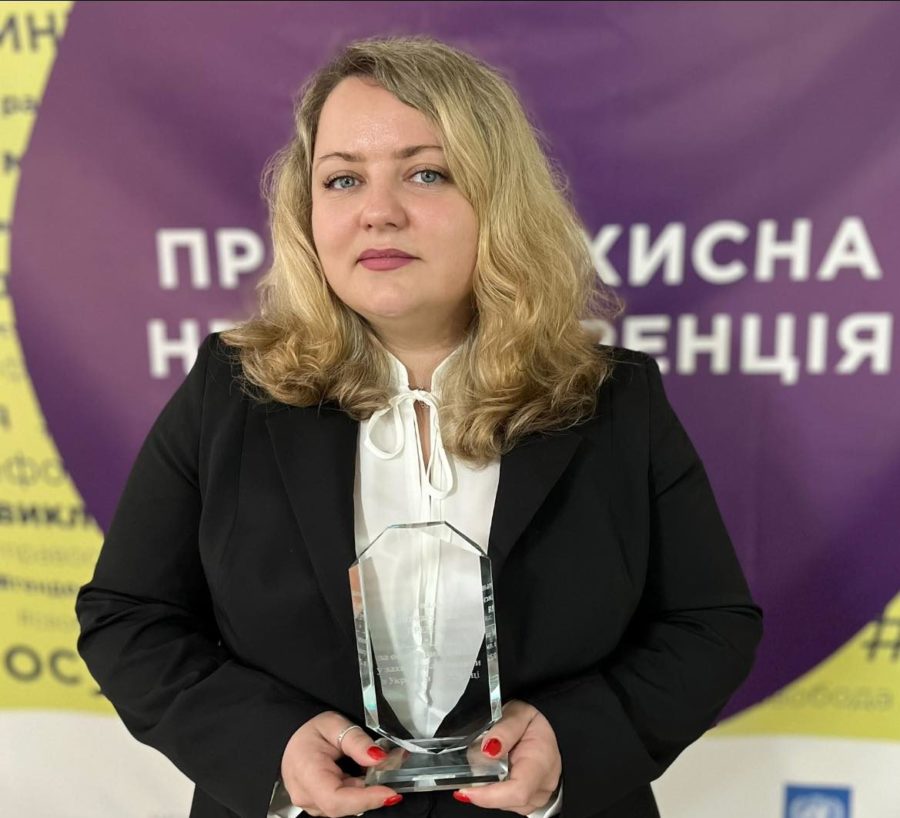
ZMINA is recognized internationally: it received the OSCE Democracy Defender Award in 2022 and contributed to the Ukraine 5AM Coalition that received the CEU Open Society Prize for documenting Russian war crimes. The organization’s work includes documenting human rights violations in occupied territories, including Crimea — specifically forced conscription, enforced disappearances, illegal detention, and persecution of Crimean Tatars.
ZMINA Staff in the PIC#
- Daniil Popkov — Legal Advisor, ZMINA Human Rights Centre; PIC member
- Liudmyla Yankina — Head of Civil Society Protection Direction, ZMINA Human Rights Centre; PIC member
Key Personnel Documented on This Site#
- Daniil Popkov — Legal Advisor, ZMINA; PIC member
- Liudmyla Yankina — Head of Civil Society Protection Direction, ZMINA; PIC member
👥 Leadership
Head of the Board
Co-founder and Board Member (served in AFU; held in Russian captivity 2022–2024)
📅 Activity Timeline
Human Rights Centre ZMINA — established as a human rights monitoring, educational, and advocacy organization
Awarded for outstanding contribution to promoting and protecting fundamental freedoms in Ukraine
Ukraine 5AM Coalition (including ZMINA) awarded for documentation of Russian war crimes