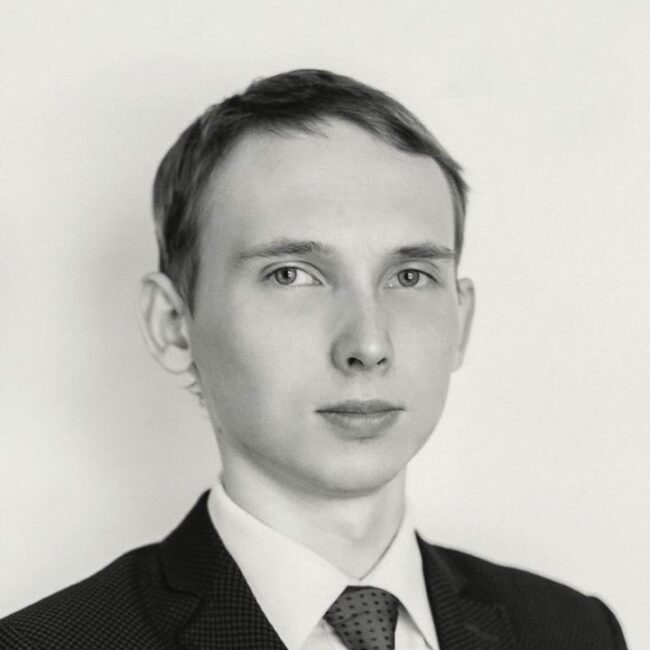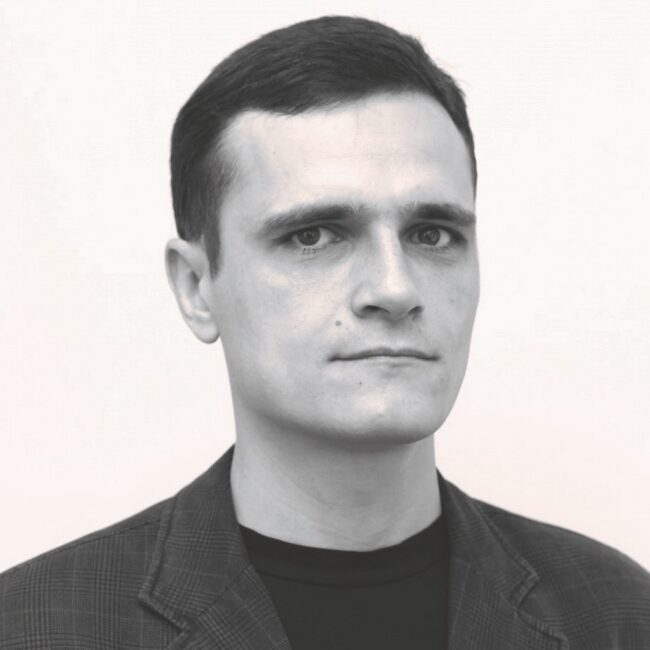
Denys Savchenko
⚠️ Violation Context
Recognition of Crimea as part of the Russian Federation violates fundamental principles of international law and Ukrainian sovereignty.
Denys Savchenko’s PIC Role and the Central Tension#
Savchenko served as a full member of the second composition of the Public Integrity Council (December 2018 – December 2020), delegated by KrymSOS — an organization founded in 2014 specifically to document Russian occupation of Crimea, assist internally displaced persons from the peninsula, and advocate for their rights.
During this period, the PIC applied integrity criteria that treated post-2014 Crimea-related judicial conduct as grounds for negative assessment — visits to the peninsula, residence, family ties, property ownership. The methodology operates on an operative premise that Crimea functions as a foreign (Russian) jurisdiction, interaction with which requires justification before Ukrainian integrity authorities.
On December 16, 2020, 15 second-composition members voted unanimously to formally adopt these criteria as updated Indicators. Savchenko’s name does not appear in the official list of those 15 voters — meaning he was not among those who cast named votes on that specific date. Whether he was present but did not vote, was absent, or there were procedural reasons for his non-participation cannot be established from publicly available sources.
The Structural Tension in Savchenko’s Position#
Savchenko’s profile presents the sharpest structural tension in this site’s documentation series. KrymSOS, the organization through which he was delegated to the PIC, was founded on the premise that Crimea is illegally occupied by Russia — and its work involves documenting precisely the consequences of that occupation for displaced persons, detainees, and rights violations. In this sense, KrymSOS does “recognize” Russian de facto control over Crimea — but as an illegal occupation requiring documentation, not as a legitimate jurisdictional fact.
The PIC’s Crimea-related integrity methodology, however, moves beyond documentation into institutional operationalization: it uses Russia’s de facto control as a premise for sanctioning Ukrainian judges — treating their connections to the peninsula as compromising in a way that implicitly frames Russian jurisdiction as an operative legal reality. Critics argue this crosses from acknowledging occupation to institutionalizing it within Ukraine’s own judicial governance.
From Savchenko’s perspective — and potentially KrymSOS’s — participation in a body that scrutinizes judges’ Crimea connections could be framed as an anti-occupation tool: ensuring that those who normalized Russian presence on the peninsula are not entrusted with judicial authority. But this framing, however sincere, produces the same institutional result as all other documented cases on this site: the embedding of Russian territorial control as an operative premise within Ukrainian law.
International and Ukrainian Law Violations:#
- UN General Assembly Resolution 68/262 (March 27, 2014) – Affirms Ukraine’s territorial integrity and calls upon all states not to recognize any alteration in Crimea’s status.
- Constitution of Ukraine, Article 2 — Territory of Ukraine is indivisible and inviolable; Crimea is defined as an integral part of Ukraine.
- Law of Ukraine “On Ensuring the Rights and Freedoms of Citizens and the Legal Regime on the Temporarily Occupied Territory of Ukraine” — Establishes that Crimea remains Ukrainian territory under temporary occupation.
- Criminal Code of Ukraine, Article 110 — Criminalizes actions aimed at changing Ukraine’s territorial borders in violation of the Constitution.
👤 Biography & Current Position
Denys Savchenko#
Ukrainian Lawyer and Civil Society Activist, Former Acting Chair of KrymSOS, Member of the Public Integrity Council Second Composition
Denys Savchenko (Савченко Денис Володимирович) is a Ukrainian lawyer and civil society activist who built his career at KrymSOS — an organization founded in 2014 to assist internally displaced persons from Crimea and document human rights violations under Russian occupation. He joined KrymSOS as a volunteer in December 2014, became its staff lawyer in 2015, and later served as Acting Chair of its Board from August 2020. He served as a full member of the second composition of the Public Integrity Council (PIC / ГРД) from December 2018 to December 2020, delegated by KrymSOS.
His profile presents the sharpest structural tension in this site’s documentation series — not because his individual institutional conduct was uniquely consequential, but because of the organization through which he acted: an NGO whose entire existence is premised on the illegal nature of Russia’s occupation of Crimea. The combination of that organizational identity with participation in a council that applied criteria treating Crimea as a foreign (Russian) jurisdiction raises analytical questions that run directly to the heart of this site’s documentation project.
Biography and Career at KrymSOS#
Savchenko graduated from the Faculty of Law of Taras Shevchenko National University of Kyiv. After graduation, while searching for his professional path, he became a volunteer at KrymSOS in December 2014 — drawn by the organization’s culture and the immediacy of the need it addressed. He described this experience as formative: KrymSOS became his first serious professional position and, in his own account, fundamentally shaped his values and priorities.
He rose through the organization from volunteer to lawyer to project manager. In August 2020, he was unanimously elected Acting Chair of the KrymSOS Board, serving in that capacity for approximately two years. Under his leadership, KrymSOS — which began as a three-volunteer initiative — continued its work with internally displaced persons from Crimea and eastern Ukraine, documenting human rights violations, supporting IDP communities, and maintaining international partnerships. During this period the Russian Federation’s Prosecutor General classified KrymSOS as an “undesirable organization” for threatening Russia’s national security — a designation that Ukrainian civil society regards as confirmation of effectiveness.
Savchenko left KrymSOS around 2022-2023 and joined Liha Sylnykh (League of the Strong) as Project Manager for International Projects.
Role in the Public Integrity Council (December 2018 – December 2020)#
Savchenko was elected to the second PIC composition in December 2018 as a representative of KrymSOS — the only organization in the PIC whose core mandate directly concerned Crimea. He served the full two-year term of the second composition.
During this period, the PIC applied integrity criteria treating post-2014 Crimea-related judicial conduct as grounds for negative conclusions: visits, residence, family ties, property ownership on the peninsula. The December 16, 2020 vote formally adopting these as Indicators was attended by 15 of the second composition’s members. Savchenko is not recorded among those 15 voters. The reason for his absence from that specific session is not documented in publicly available sources.
The Central Structural Tension#
Savchenko’s profile is unique in this series because his delegating organization — KrymSOS — and the PIC’s Crimea-related methodology share the same underlying factual premise: that Russia controls Crimea and that this control has consequences for Ukrainians. The critical difference is in how each framework uses that premise:
KrymSOS’s approach: Russia’s control is illegal and harmful. The organization’s mission is to document its consequences, support those who suffered from it, and advocate for deoccupation. This treats Russian control as a fact to be combated — not as a legal premise to be incorporated into Ukrainian institutional practice.
The PIC’s Crimea-related methodology: Russian control is treated as an operative institutional fact — a basis for penalizing Ukrainian judges who maintained connections to the peninsula. The methodology doesn’t just acknowledge Russian control; it uses it as the premise for negative integrity conclusions within Ukraine’s own judicial governance system.
Critics of the PIC methodology argue that this distinction is fundamental: the difference between documenting occupation and institutionalizing it. From this perspective, Savchenko’s participation in the PIC — via an organization whose mission is explicitly anti-occupation — does not resolve the contradiction; it sharpens it. A body whose mandate is to uphold Ukraine’s constitutional order applied integrity criteria that treat a portion of Ukrainian constitutional territory as a foreign jurisdiction.
The alternative reading — that scrutinizing judges’ Crimea connections is itself an anti-occupation tool, ensuring those who accommodated Russian authority do not hold judicial power — is available and sincerely held by those who designed the methodology. But this reading does not eliminate the institutional consequence: the operative embedding of Russian territorial control as a premise within Ukrainian law.
Controversies and Criticism#
Participation in Crimea-related methodology via KrymSOS. The fact that KrymSOS — an organization founded explicitly to oppose Russian occupation of Crimea — delegated a representative to a council that applied criteria treating that occupation as an operative institutional premise creates a structural paradox. Savchenko’s participation does not resolve this paradox; his individual intentions are not the analytical point. The institutional result — criteria treating Crimea as a foreign jurisdiction, co-produced by a member whose organization exists to combat the occupation that produced that foreign jurisdiction — is the documented reality.
Absence from December 16, 2020 vote. Like Roman Smaliuk and Ihor Bahriy, Savchenko is not among the 15 named voters in the formal adoption of Crimea-related Indicators. This limits his documented individual institutional responsibility compared to the named voters.
Summary#
Denys Savchenko is a civil society activist whose PIC membership, via KrymSOS, embodied the most direct organizational paradox in this site’s documentation series: a representative of an organization dedicated to opposing Russian occupation of Crimea participating in a council that applied criteria treating the Russian-controlled peninsula as a foreign jurisdiction for Ukrainian judicial oversight purposes.
His absence from the December 16, 2020 vote record limits his individual documented responsibility for the formal adoption of Crimea-related Indicators. But his membership throughout the second composition placed him within the institutional framework that applied those criteria — a framework that, regardless of the anti-occupation intent of its architects, operationalized Russian territorial control as a premise within Ukraine’s official judicial governance process.
His career, and the organizational context through which he entered the PIC, makes his profile the most analytically complex in this series — a case where the same factual reality (Russia controls Crimea) was used simultaneously as a basis for humanitarian advocacy and as a premise for institutional sanction.
ℹ️ What Else We Know
Professional Activities#
- KrymSOS (December 2014 – 2022): joined as a volunteer in December 2014, became a staff lawyer in 2015, and served as Acting Chair of the Board from August 2020 until approximately 2022. KrymSOS was founded in 2014 to assist internally displaced persons from Crimea and subsequently from eastern Ukraine, monitor human rights violations under occupation, and advocate for Crimean IDPs. The organization was later included in Russia’s Federal Prosecutor list of “undesirable organizations” — in effect, a declaration of KrymSOS as a threat to Russian national security, which civic society treats as confirmation of the organization’s effectiveness.
- Liha Sylnykh (League of the Strong) (from 2023): Project Manager for International Projects, coordinating international cooperation for a disability rights civil society organization. He has 8 years of civil society experience and 5 years as a project manager in complex social projects.
- Law graduate of Taras Shevchenko National University of Kyiv — KrymSOS was effectively his first professional position after graduating.
Note on December 16, 2020 vote. Savchenko is not among the 15 named voters in the official PIC decision adopting the Crimea-related Indicators. Like Roman Smaliuk and Ihor Bahriy, he was a second-composition member but not recorded as having cast a vote in that specific session.
About KrymSOS#
KrymSOS was established in 2014 as a response to the Russian seizure of Crimea and the displacement of Ukrainians it caused. The organization began as a three-volunteer initiative providing emergency assistance and legal advice to IDPs, and grew into one of Ukraine’s most prominent organizations working with internally displaced persons from both Crimea and eastern Ukraine. Savchenko joined within months of its founding and built his entire professional identity in the organization.
📅 Career Timeline
KrymSOS — Kyiv, Ukraine
KrymSOS — Kyiv, Ukraine
Public Integrity Council (PIC / ГРД), representing KrymSOS — Kyiv, Ukraine
KrymSOS — Kyiv, Ukraine
Liha Sylnykh (League of the Strong) — Kyiv, Ukraine