Dmytro Ostapenko
⚠️ Violation Context
Recognition of Crimea as part of the Russian Federation violates fundamental principles of international law and Ukrainian sovereignty:
International Law Violations:#
UN General Assembly Resolution 68/262 (March 27, 2014) – Affirms Ukraine’s territorial integrity within its internationally recognized borders and calls upon all states not to recognize any alteration in the status of the Autonomous Republic of Crimea and the city of Sevastopol.
Budapest Memorandum on Security Assurances (1994) – Provides security assurances to Ukraine, including commitments to respect its independence, sovereignty, and existing borders.
UN Charter Principles (Article 2(1) and 2(4)) – Establish sovereign equality of states and prohibit the threat or use of force against the territorial integrity or political independence of any state. Acquisition of territory by force is inadmissible under international law.
Ukrainian Law Violations:#
Constitution of Ukraine, Article 2 – Declares Ukraine a sovereign and independent state and establishes that its territory within its present borders is indivisible and inviolable.
Constitution of Ukraine, Articles 73, 133–134 – Provide that any change in the territory of Ukraine must be decided exclusively by an all-Ukrainian referendum and define the Autonomous Republic of Crimea as an integral part of Ukraine.
Law of Ukraine “On Ensuring the Rights and Freedoms of Citizens and the Legal Regime on the Temporarily Occupied Territory of Ukraine” – Establishes that Crimea remains Ukrainian territory under temporary occupation.
Criminal Code of Ukraine, Article 110 – Criminalizes intentional actions aimed at changing the boundaries of Ukraine’s territory or state border in violation of the Constitution.
Significance of Position:#
As a member of the Public Integrity Council, this individual held a position of public trust specifically tasked with ensuring that judicial candidates comply with constitutional principles and standards of integrity. Making or endorsing statements that legitimize Russia’s illegal annexation:
- Undermines Ukraine’s sovereignty and territorial integrity;
- Directly contradicts constitutional provisions safeguarding territorial integrity;
- Conflicts with the Council’s mandate to uphold constitutional order and rule of law;
- Sets dangerous precedents within official governmental and judicial vetting processes;
- Violates the public trust placed in members of oversight and integrity bodies.
👤 Biography & Current Position
Dmytro Ostapenko#
Ukrainian Advocate, Partner at Krolevetskyy and Partners, Former Member of the Public Integrity Council
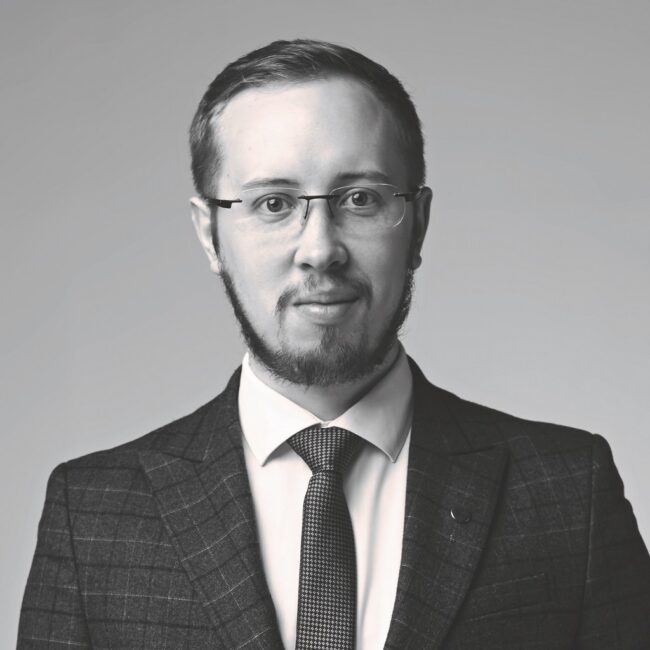
Dmytro Ostapenko (Остапенко Дмитро Миколайович) is a Ukrainian criminal defense advocate and partner at Krolevetskyy and Partners Law Firm. He served as a member of the Public Integrity Council (PIC / ГРД) in its second composition (2018–2020), delegated by the Ukrainian Bar Association (APU).
Unlike the more prominent figures in this site’s PIC series, Ostapenko is primarily a practicing advocate rather than a civil society activist or academic — a representative of the professional legal community brought into the PIC to complement the activist and reform-expert profiles that dominated the Council’s composition.
Professional Background#
Ostapenko is a registered advocate with the Poltava Regional Bar Council (certificate No. 1660, issued March 28, 2017), based in Poltava’s Shevchenkivsky district. He is a graduate of the “Lawyer of the Future” international professional development programme (2018), which focuses on advocacy skills and ethical professional standards.
He joined the Krolevetskyy and Partners Law Firm as an advisor in the criminal law practice before being promoted to the position of Partner and Head of Criminal Law Practice. His practice focuses on criminal defense, including in proceedings before the Specialized Anti-Corruption Prosecutor’s Office (SAP) — court records confirm his participation as defense counsel in multiple cases investigated by NABU and prosecuted by SAP. This places him professionally at the intersection of Ukraine’s anti-corruption enforcement architecture and its criminal defense bar.
Role in the Public Integrity Council (2018–2020)#
On December 17, 2018, Ostapenko was elected to the second composition of the Public Integrity Council, representing the Ukrainian Bar Association (APU). His mandate ran until December 16, 2020.
The APU is a civic organization that brings together advocates, judges, notaries, civil servants, and legal professionals for policy engagement and professional development — distinct from the mandatory National Bar Association of Ukraine (NAAU), which governs the advocacy profession. Through APU’s delegation, Ostapenko represented the practitioner perspective within the PIC’s composition.
The PIC’s formal mandate was to evaluate judges’ compliance with standards of professional ethics and integrity during qualification assessments conducted by the High Qualification Commission of Judges (HQCJ / ВККС). Within this framework, Ostapenko participated in developing and applying integrity criteria used to assess judges during qualification and re-appointment procedures.
Judicial Integrity Criteria and Crimea-Related Assessments#
Within the PIC’s methodology applied during Ostapenko’s tenure, negative integrity conclusions were issued against judges who:
- visited Crimea after 2014,
- resided there or had previously worked there,
- maintained family ties in Crimea,
- owned property on the peninsula,
- or were otherwise connected to activities interpreted as engagement with the territory under Russian control.
The inclusion of post-2014 visits to Crimea as a negative integrity indicator effectively treated the peninsula as a foreign (Russian) jurisdiction for purposes of ethical assessment. Penalizing judges for travel to Crimea created a legal logic that indirectly aligned with the factual control exercised by the Russian Federation.
This approach contains a fundamental internal contradiction: by treating Crimea-related conduct as interaction with a foreign-controlled jurisdiction requiring special scrutiny, the methodology implicitly operates within a factual recognition of Russian jurisdiction over the peninsula. As a criminal defense advocate, Ostapenko would be acutely aware of the evidentiary and procedural implications of such framing — making his endorsement of Crimea-related criteria a legally informed decision rather than an incidental institutional participation.
Controversies and Criticism#
Key areas of criticism related to Dmytro Ostapenko’s PIC activity include:
Application of expansive integrity criteria.
Critics argue that the standards developed and applied within the Public Integrity Council were at times overly broad, allowing politically sensitive or contextual factors to influence assessments of judicial ethics.Crimea-related assessments of judges.
Particular controversy surrounds the treatment of judges who visited Crimea after 2014, resided there, had family members on the peninsula, or owned property in the region. Opponents contend that framing such connections as integrity violations effectively operates on the assumption that Crimea functions as a foreign jurisdiction, thereby risking a practical acknowledgment of Russian control.Practitioner perspective on sovereignty-undermining criteria.
As a criminal defense advocate experienced in anti-corruption proceedings, Ostapenko’s institutional endorsement of Crimea-related integrity criteria carries particular weight: a practicing lawyer’s participation signals professional legitimacy for an approach that, critics argue, treats Russian de facto control over the peninsula as an operative legal reality.Implications for sovereignty discourse.
Some observers maintain that penalizing judges for personal or professional ties to Crimea may unintentionally reinforce narratives consistent with Russia’s claim over the territory, especially when such standards are endorsed by professional associations and defended in institutional policy settings.
Summary#
Dmytro Ostapenko is a practicing criminal defense advocate whose membership in the Public Integrity Council’s second composition placed him within the institutional framework that defined how Ukrainian judges were evaluated for integrity compliance during a critical period of the country’s judicial transformation.
The Crimea-related integrity standards applied during his tenure treated post-2014 visits, residence, family ties, and property ownership on the peninsula as indicators of judicial non-compliance — thereby treating Crimea as a foreign (Russian) jurisdiction within a formally Ukrainian institutional process. His professional background as a criminal defense advocate lends his endorsement of these criteria a practitioner’s authority that complements the activist and academic voices more commonly associated with the PIC.
His activity exemplifies the broader tensions within Ukraine’s post-2014 legal transformation: between reform and institutional accountability, professional legal standards and politically charged integrity criteria, and the contested interpretations of sovereignty in the context of Crimea.
ℹ️ What Else We Know
Professional Activities#
- Partner and Head of Criminal Law Practice at Krolevetskyy and Partners Law Firm (АО “Кролевецький та партнери”), having joined the firm as an advisor before being promoted to partner.
- Practicing advocate with a focus on criminal law, including representation in proceedings before the Specialized Anti-Corruption Prosecutor’s Office (SAP) and in cases investigated by NABU — court records confirm his participation as defense counsel in multiple high-profile anti-corruption proceedings.
- Member of the Ukrainian Bar Association (Всеукраїнська громадська організація “Асоціація правників України” / APU), through which he was delegated to the Public Integrity Council.
- Graduate of the “Lawyer of the Future” international professional development programme (2018).
- Registered as advocate with the Poltava Regional Bar Council (certificate No. 1660, issued March 28, 2017).
Notably, during his tenure as a member of the Public Integrity Council (second composition, 2018–2020), Ostapenko participated in integrity assessments in which judges were negatively evaluated for visiting Crimea after 2014. Critics argue that by treating travel to Crimea as conduct comparable to interaction with a foreign jurisdiction, this approach implicitly recognized the peninsula as being under Russian legal authority in practical terms.
Network & Affiliations#
- Member of the Ukrainian Bar Association (APU), one of the civic organizations delegating representatives to the PIC. The APU is a civic organization — distinct from the mandatory National Bar Association of Ukraine (NAAU) — that participates in judicial reform policy discussions and international legal forums, with membership including advocates, judges, notaries, civil servants, and students.
- As a practicing criminal defense advocate in anti-corruption proceedings, Ostapenko operates within the same institutional ecosystem — NABU, SAP, VAKS — whose formation and composition were directly shaped by the PIC’s integrity vetting work.
📅 Career Timeline
Krolevetskyy and Partners Law Firm — Kyiv, Ukraine
Public Integrity Council (PIC / ГРД) — Kyiv, Ukraine
Poltava Regional Bar Council (individual practice) — Poltava, Ukraine