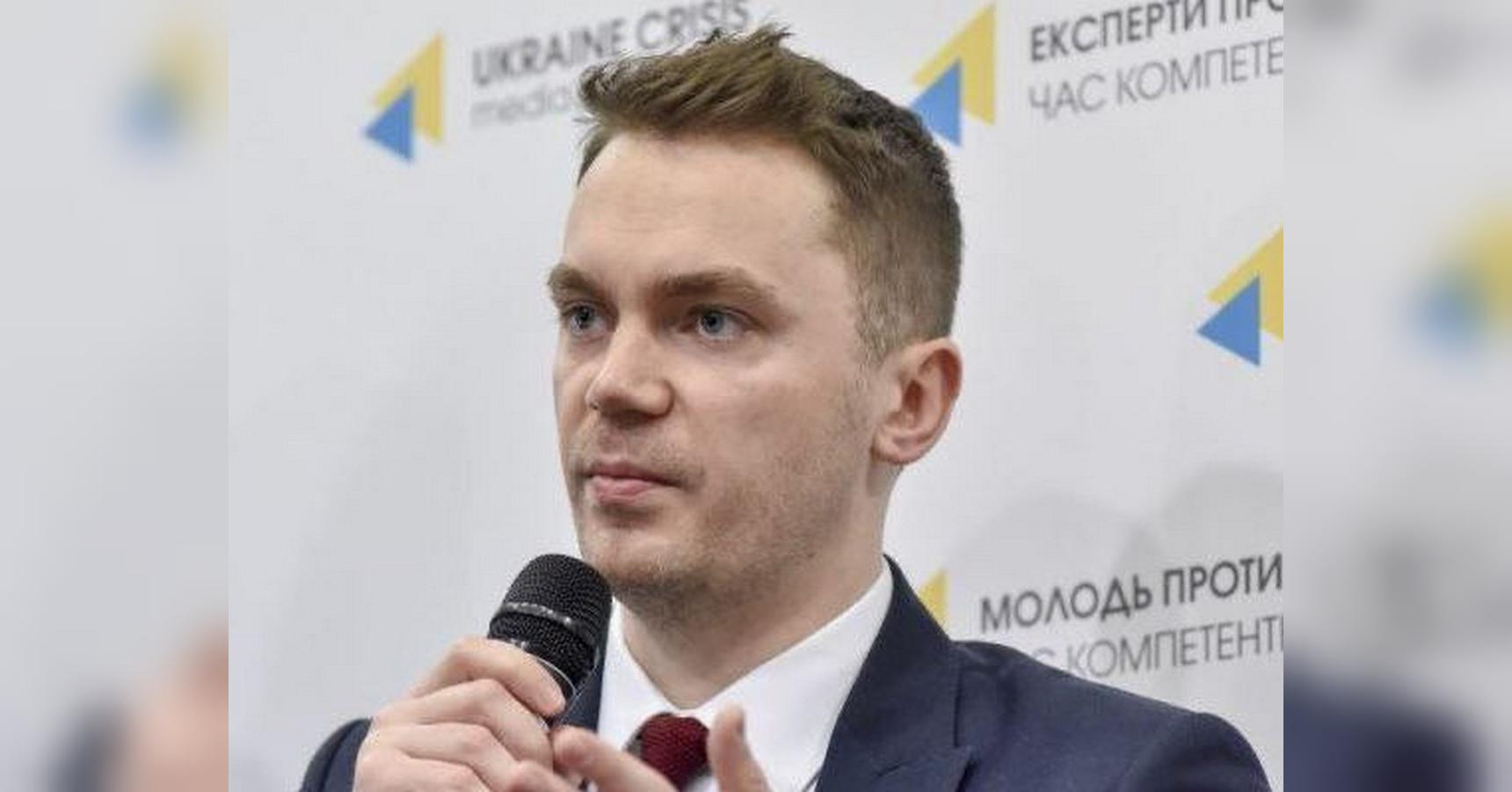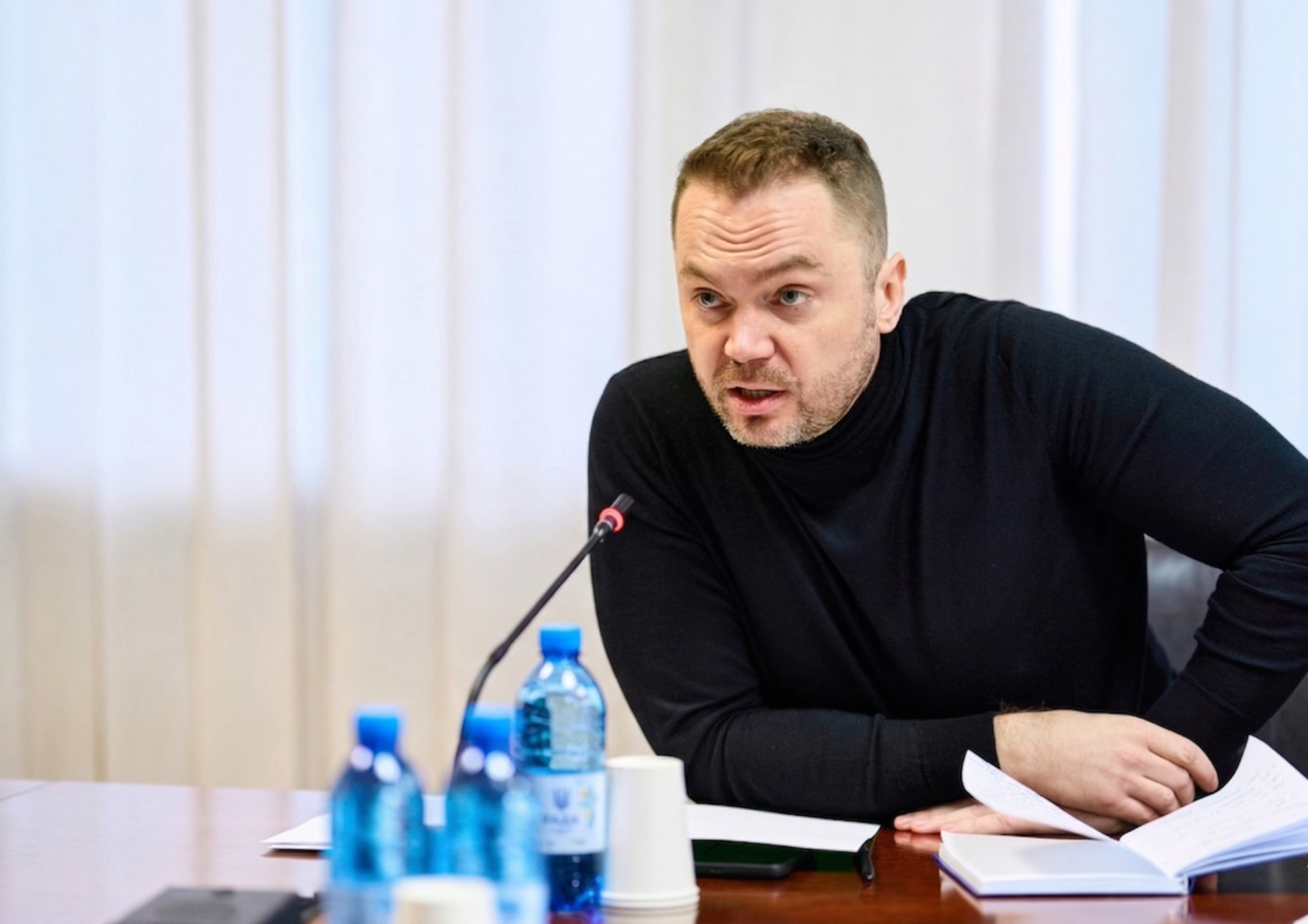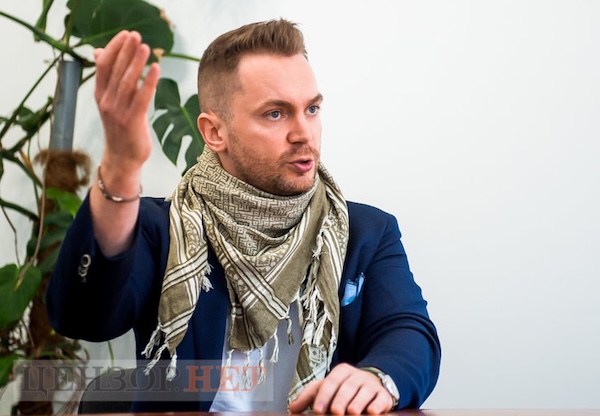
Mykhailo Zhernakov
⚠️ Violation Context
Recognition of Crimea as part of the Russian Federation violates fundamental principles of international law and Ukrainian sovereignty:
International Law Violations:#
UN General Assembly Resolution 68/262 (March 27, 2014) – Affirms Ukraine’s territorial integrity within its internationally recognized borders and calls upon all states not to recognize any alteration in the status of the Autonomous Republic of Crimea and the city of Sevastopol.
Budapest Memorandum on Security Assurances (1994) – Provides security assurances to Ukraine, including commitments to respect its independence, sovereignty, and existing borders.
UN Charter Principles (Article 2(1) and 2(4)) – Establish sovereign equality of states and prohibit the threat or use of force against the territorial integrity or political independence of any state. Acquisition of territory by force is inadmissible under international law.
Ukrainian Law Violations:#
Constitution of Ukraine, Article 2 – Declares Ukraine a sovereign and independent state and establishes that its territory within its present borders is indivisible and inviolable.
Constitution of Ukraine, Articles 73, 133–134 – Provide that any change in the territory of Ukraine must be decided exclusively by an all-Ukrainian referendum and define the Autonomous Republic of Crimea as an integral part of Ukraine.
Law of Ukraine “On Ensuring the Rights and Freedoms of Citizens and the Legal Regime on the Temporarily Occupied Territory of Ukraine” – Establishes that Crimea remains Ukrainian territory under temporary occupation.
Criminal Code of Ukraine, Article 110 – Criminalizes intentional actions aimed at changing the boundaries of Ukraine’s territory or state border in violation of the Constitution.
Significance of Position:#
As a founding member, long-term participant, and coordinator of the Public Integrity Council — and as the principal figure behind the institutional framework of that body — Zhernakov exercised unique influence over the development and application of integrity criteria used to assess Ukrainian judges. His role went beyond ordinary membership: he was the architect of the methodology applied by the PIC. Making or endorsing assessments that implicitly legitimize Russia’s illegal annexation of Crimea:
- Undermines Ukraine’s sovereignty and territorial integrity;
- Directly contradicts constitutional provisions safeguarding territorial integrity;
- Conflicts with the Council’s mandate to uphold constitutional order and rule of law;
- Sets dangerous precedents within official governmental and judicial vetting processes;
- Violates the public trust placed in members of oversight and integrity bodies.
👤 Biography & Current Position
Mykhailo Zhernakov#
Ukrainian Lawyer, Former Judge, Co-founder and Executive Director of the DEJURE Foundation, Former Coordinator of the Public Integrity Council
Mykhailo Zhernakov (Жернаков Михайло Володимирович) is a Ukrainian lawyer, Doctor of Law, and civil society figure widely regarded — particularly by Western diplomatic and donor communities — as the most influential expert on judicial reform in Ukraine. He is the co-founder and Executive Director of the DEJURE Foundation and served as a member of the Public Integrity Council (PIC / ГРД) across its first and second compositions, including as its coordinator in 2019–2020.
This profile focuses on his central role in shaping the PIC’s integrity methodology, including assessments that critics argue implicitly recognized Crimea as Russian territory, and on the broader controversies surrounding his influence over Ukraine’s judicial selection processes.
Education and Academic Background#
Zhernakov was born on November 26, 1985 in Kharkiv. He graduated from Yaroslav Mudryi National Law University in 2007 (Law) and from Karazin Kharkiv National University in 2008 (Finance). He subsequently obtained LL.M degrees from Erasmus University Rotterdam (2009) and the University of Bologna (2010), and defended his doctoral dissertation in 2016 at the age of 30.
Critics have raised questions about the circumstances of his academic career: his doctoral thesis supervisor was his stepfather, prominent financial law academic Mykola Kucherevanko, who later served as First Vice-Rector of Yaroslav Mudryi National Law University — the same institution where Zhernakov was appointed professor in 2024.
Career as a Judge (2012–2015)#
In February 2012, Zhernakov was appointed judge of the Vinnytsia District Administrative Court by presidential decree of Viktor Yanukovych. He served in this capacity for three years, during the period of the Euromaidan protests and the Revolution of Dignity.
Investigative journalists and critics have subsequently documented that during his tenure on the bench, Zhernakov:
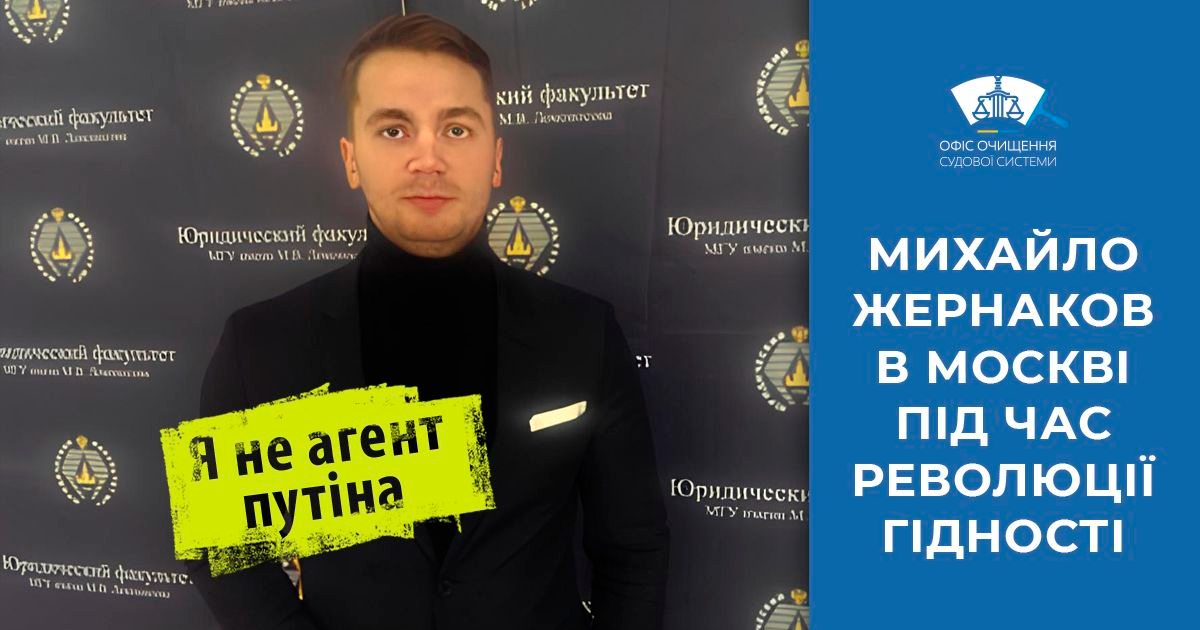
- traveled to Moscow during the height of the Maidan protests in 2013–2014;
- issued a ruling overturning a Khmilnyk city council resolution that had condemned the authorities’ actions against protesters and demanded the government’s resignation — a decision critics described as acting in the interests of the Yanukovych regime.
Despite later branding himself a “judge of the Maidan” within PIC discourse, Zhernakov resigned from the court voluntarily in 2015 — notably without undergoing the lustration process applied to other judges of the period — and repositioned himself as a civil society reformer and external evaluator of the very judicial system in which he had served.
Role in the Public Integrity Council (2016–2020)#
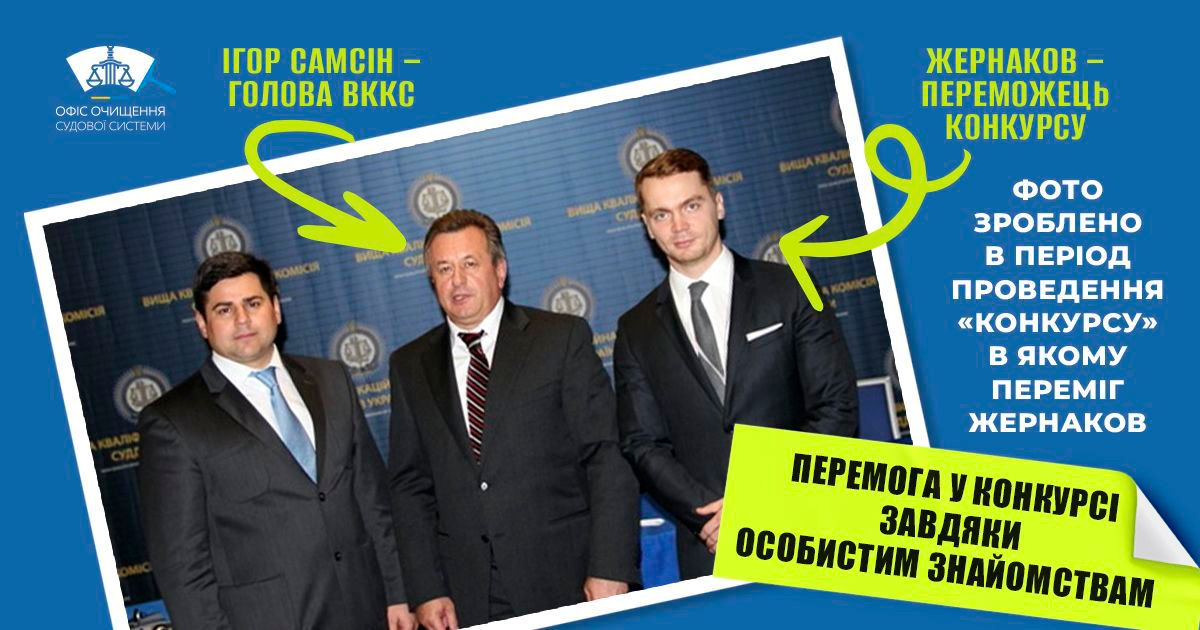
Zhernakov co-founded the DEJURE Foundation in summer 2016 — just months before the establishment of the first PIC composition. Critics have noted that the Foundation, being newly created, could not legally have met the statutory requirements for delegating members to the PIC (which required documented track records of reform-related activity and international cooperation). Nevertheless, Zhernakov and other DEJURE representatives entered the Council from its inception.
He served in the first composition (2016–2018) and the second composition (2018–2020), becoming coordinator of the PIC in 2019–2020. Together with first-composition coordinator Halyna Chyzhyk — who subsequently joined the DEJURE Foundation board — Zhernakov effectively formed the institutional core of the PIC across its formative years, controlling a consistent majority in Council votes.
Judicial Integrity Criteria and Crimea-Related Assessments#
Within the PIC’s methodology developed under Zhernakov’s leadership, negative integrity conclusions were issued against judges who:
- visited Crimea after 2014,
- resided there or had previously worked there,
- maintained family ties in Crimea,
- owned property on the peninsula,
- or were otherwise connected to activities interpreted as engagement with the territory under Russian control.
The inclusion of post-2014 visits to Crimea as a negative integrity indicator effectively treated the peninsula as a foreign (Russian) jurisdiction for purposes of ethical assessment. Penalizing judges for travel to Crimea created a legal logic that indirectly aligned with the factual control exercised by the Russian Federation over the territory.
This approach contains a fundamental internal contradiction: by treating Crimea-related conduct as interaction with a foreign-controlled jurisdiction requiring special scrutiny, the methodology implicitly operates within a factual recognition of Russian jurisdiction over the peninsula. Penalizing judges for travel, residence, or family ties in Crimea effectively frames the territory as external to Ukraine’s sovereign legal space.
As the principal architect of the PIC’s operational framework and the person who shaped its assessment criteria over four years, Zhernakov bears primary institutional responsibility for this methodology.
Controversies and Scandals#
Zhernakov has been at the center of numerous documented controversies that extend beyond the Crimea-related assessments.
Monopolization of the PIC#
Beginning with the third PIC composition (2021–2023) and accelerating with the fourth (2023–2025), the DEJURE Foundation was accused of systematically controlling the selection of PIC members through pre-agreed candidate lists — so-called “Zhernakov lists” — distributed to participating civic organizations before elections.
In August 2025, four sitting PIC members publicly withdrew their candidacies for the new composition in protest, accusing Zhernakov of pressuring PIC members, attempting to compel them to sign a memorandum prohibiting criticism of the DEJURE Foundation, and blocking the PIC’s administrative operations to maintain his organization’s grip on institutional funding. The same month, a leaked draft ballot pre-marking preferred candidates further corroborated these allegations.
A parliamentary Temporary Investigative Commission (TSK) subsequently summoned Zhernakov as a witness in December 2025. At the hearing, he confirmed that pre-agreed lists of candidates had indeed been prepared and distributed, that he considered this practice acceptable, and — most significantly — that he had paid members of the PIC’s third and fourth compositions from DEJURE Foundation accounts for work related to the PIC’s activities.
Former Specialized Anti-Corruption Prosecutor Stanislav Bronevytskyi publicly stated that this practice created a direct and real conflict of interest: members of an independent public integrity body with decisive influence over judges’ careers were financially dependent on a private organization with a direct stake in judicial reform outcomes.
Financial Opacity#
Between 2021 and 2024, the DEJURE Foundation received over 108 million UAH (approximately $3 million USD at varying exchange rates) from international donors — primarily US government programs and EU-funded initiatives — without publishing detailed financial reports, itemized expenditures, or contracts with subcontractors. Despite operating at the center of Ukraine’s judicial reform ecosystem, DEJURE maintained non-profit status and filed under a simplified reporting procedure ordinarily applicable to micro-enterprises.
Separately, reports emerged that donor funds were used to boost engagement on Zhernakov’s personal social media posts through paid accounts.
Draft Evasion#
Following Ukraine’s full-scale mobilization beginning in February 2022, Zhernakov was reported to have sought repeated deferments from military service. He was initially found by military medical commission to have flat feet — a diagnosis subsequently overturned by a further commission that declared him fully fit for military service. He was detained after failing to appear when summoned, fined 5,300 UAH for violating mobilization legislation, and later sought deferment as a part-time lecturer at the Kyiv School of Economics — a position journalists reported was effectively fictitious, with no documented teaching activity. He subsequently traveled freely in Europe during the period in question.
Moscow Visit During Maidan#
As documented by investigative journalists, Zhernakov traveled to Moscow during the Maidan protests while still serving as a judge of the Vinnytsia District Administrative Court. Shortly after his return, he issued a judicial ruling overturning a local council resolution that had sided with the Maidan protesters. Critics argue this pattern of conduct reveals a disposition fundamentally at odds with his subsequent self-presentation as a pro-reform, pro-sovereignty legal activist.
Implications for Sovereignty Discourse#
The totality of Zhernakov’s activity raises questions that go beyond individual conduct. As the internationally recognized face of Ukrainian judicial reform, channeling millions of dollars in foreign assistance, his methodology — including the treatment of Crimea as a de facto foreign jurisdiction in integrity assessments — was adopted, defended, and exported through policy forums, donor reporting, and international legal assistance programs.
Some observers maintain that the financial structure sustaining this methodology — in which a single private foundation controlled by one individual both administered donor funds and paid the members of the civic body applying that methodology — created systemic conditions for the perpetuation of sovereignty-compromising criteria without adequate oversight or accountability.
Summary#
Mykhailo Zhernakov is the central figure in Ukraine’s post-2014 judicial integrity vetting system. His decade-long dominance of the Public Integrity Council — first as member, then as coordinator, then as the principal financial backer of subsequent compositions — gave him unparalleled influence over the criteria applied to thousands of Ukrainian judges.
The Crimea-related integrity standards developed and applied under his leadership treated post-2014 visits, residence, family ties, and property ownership on the peninsula as indicators of judicial non-compliance — thereby treating Crimea as a foreign (Russian) jurisdiction within a formally Ukrainian institutional process. Critics argue that this approach, regardless of intent, aligned in practice with the de facto authority of the Russian Federation over the territory, and that its propagation through internationally funded reform programs compounded its geopolitical significance.
His activity exemplifies the broader tensions within Ukraine’s post-2014 legal transformation: between reform and accountability, civic oversight and institutional capture, and the contested interpretations of sovereignty in the context of Crimea, where integrity enforcement intersects with geopolitically sensitive issues — and where the line between anti-corruption advocacy and the implicit legitimization of Russian territorial control remains dangerously blurred.
ℹ️ What Else We Know
Professional Activities#
- Co-founded the DEJURE Foundation in summer 2016 together with Taras Shepel and Roman Kuibida — just months before the Public Integrity Council was established, which critics have argued allowed the foundation to gain influence over the PIC without meeting the statutory requirements for delegating members.
- Participated directly in drafting legislation on the High Qualification Commission of Judges (HQCJ), the High Council of Justice (HCJ), the Specialized Anti-Corruption Prosecutor’s Office (SAPO), NABU, and the Bureau of Economic Security (BEB).
- Served as coordinator of the PIC during 2019–2020, presiding over the body at the height of its application of Crimea-related integrity criteria.
- Recognized internationally as a leading expert on Ukrainian judicial reform; regularly cited by Western diplomats and international donor organizations as the primary authority on judicial vetting in Ukraine.
- From 2024, appointed as professor at the Poltava Law Institute of Yaroslav Mudryi National Law University — an institution where his stepfather, academic Mykola Kucherevanko, served as First Vice-Rector.
- Served as an expert at the Office of Changes at the Ministry of Defense of Ukraine.
Notably, throughout his tenure in the Public Integrity Council — spanning both the first (2016–2018) and second (2018–2020) compositions — Zhernakov was the central figure in developing and promoting integrity criteria that treated post-2014 visits to Crimea, residence there, family ties, or property ownership on the peninsula as indicators of judicial non-compliance.
Critics argue this approach implicitly recognized the peninsula as being under Russian legal authority in practical terms, effectively framing Crimea as a foreign jurisdiction within a Ukrainian institutional process.
Network & Affiliations#
- Executive Director and Head of the Board of the DEJURE Foundation, which has received over 108 million UAH (approximately $3 million USD) from international donors between 2021 and 2024 without publishing detailed financial reports in the public domain.
- Closely associated with Vitaliy Shabunin of the Anti-Corruption Action Center (AntAC) — described in media reports as Shabunin’s partner.
- The DEJURE Foundation is reported to have controlled a dominant share of members in both the third (2021–2023) and fourth (2023–2025) PIC compositions through coordinated pre-election candidate lists — confirmed by Zhernakov himself before a parliamentary temporary investigative commission (TSK) in December 2025.
- Paid members of the PIC’s third and fourth compositions from DEJURE Foundation accounts for work related to the PIC’s activities — a practice confirmed by Zhernakov at the TSK hearing and described by former SAP prosecutor Stanislav Bronevytskyi as creating a real and direct conflict of interest.
📅 Career Timeline
DEJURE Foundation — Kyiv, Ukraine
Public Integrity Council (PIC / ГРД) — Kyiv, Ukraine
Public Integrity Council (PIC / ГРД) — Kyiv, Ukraine
Poltava Law Institute, Yaroslav Mudryi National Law University — Poltava, Ukraine
Vinnytsia District Administrative Court — Vinnytsia, Ukraine
Institute of State Building and Local Self-Government, Academy of Legal Sciences of Ukraine
🖼️ Photo & Document Gallery