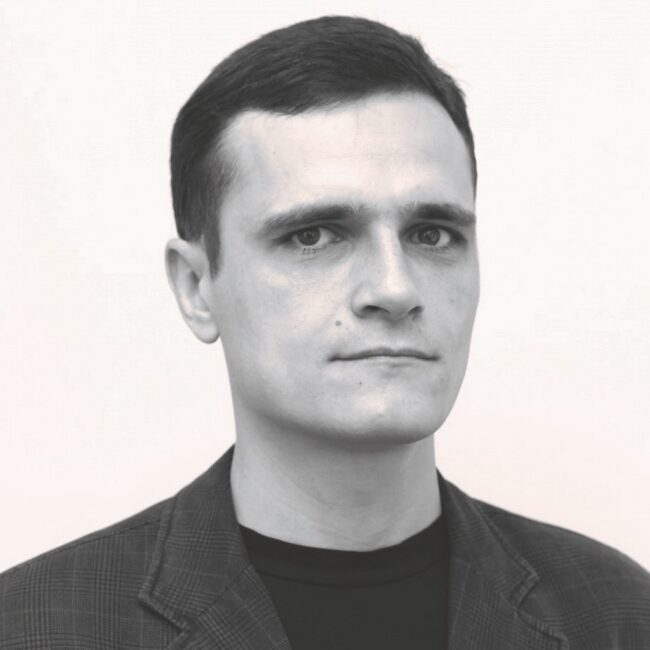
Roman Sukhostavets
⚠️ Violation Context
Recognition of Crimea as part of the Russian Federation violates fundamental principles of international law and Ukrainian sovereignty:
International Law Violations:#
UN General Assembly Resolution 68/262 (March 27, 2014) – Affirms Ukraine’s territorial integrity within its internationally recognized borders and calls upon all states not to recognize any alteration in the status of the Autonomous Republic of Crimea and the city of Sevastopol.
Budapest Memorandum on Security Assurances (1994) – Provides security assurances to Ukraine, including commitments to respect its independence, sovereignty, and existing borders.
UN Charter Principles (Article 2(1) and 2(4)) – Establish sovereign equality of states and prohibit the threat or use of force against the territorial integrity or political independence of any state. Acquisition of territory by force is inadmissible under international law.
Ukrainian Law Violations:#
Constitution of Ukraine, Article 2 – Declares Ukraine a sovereign and independent state and establishes that its territory within its present borders is indivisible and inviolable.
Constitution of Ukraine, Articles 73, 133–134 – Provide that any change in the territory of Ukraine must be decided exclusively by an all-Ukrainian referendum and define the Autonomous Republic of Crimea as an integral part of Ukraine.
Law of Ukraine “On Ensuring the Rights and Freedoms of Citizens and the Legal Regime on the Temporarily Occupied Territory of Ukraine” – Establishes that Crimea remains Ukrainian territory under temporary occupation.
Criminal Code of Ukraine, Article 110 – Criminalizes intentional actions aimed at changing the boundaries of Ukraine’s territory or state border in violation of the Constitution.
Significance of Position:#
As a member of the Public Integrity Council across both its first and second compositions — one of only ten people to serve in both — Sukhostavets participated continuously in developing and applying integrity criteria over the Council’s entire foundational four-year period. His four-year presence encompassed the full arc of the Crimea-related methodology: from its initial application in the first composition through its institutional consolidation at the close of the second. Making or endorsing assessments that implicitly legitimize Russia’s illegal annexation:
- Undermines Ukraine’s sovereignty and territorial integrity;
- Directly contradicts constitutional provisions safeguarding territorial integrity;
- Conflicts with the Council’s mandate to uphold constitutional order and rule of law;
- Sets dangerous precedents within official governmental and judicial vetting processes;
- Violates the public trust placed in members of oversight and integrity bodies.
👤 Biography & Current Position
Roman Sukhostavets#
Ukrainian Lawyer and Civic Activist, Founder of Bureau of Legal Communications, Member of the Public Integrity Council (Both First and Second Compositions)
Roman Sukhostavets (Сухоставець Роман Миколайович) is a Ukrainian lawyer and civic activist based in Sumy, founder of the Bureau of Legal Communications (ГО “Бюро правничих комунікацій”) and the civic initiative “My — Sumchany”. He served as a member of the Public Integrity Council (PIC / ГРД) across both its first (2016–2018) and second (2018–2020) compositions, making him one of only ten PIC members to participate continuously across the Council’s entire foundational four years.
Sukhostavets stands out within this site’s PIC series as one of its few genuinely regional figures — based in Sumy rather than Kyiv, delegated through regional civic organizations, and engaged in judicial transparency work that focused on the practical accessibility of courts rather than the political dynamics of Kyiv-centered reform advocacy. This regional dimension did not, however, insulate him from the institutional logic of the PIC’s methodology: his continuous four-year participation placed him as a direct party to the development and application of Crimea-related integrity criteria across the Council’s full formative period.
Professional Background#
Sukhostavets founded the Bureau of Legal Communications (ГО “Бюро правничих комунікацій”), registered in Sumy, which focuses on judicial transparency monitoring and legal advocacy. The Bureau led the “All-Ukrainian Monitoring of Informational Content of Court Websites” project — a nationwide assessment of how Ukrainian courts present information to the public online. This work brought Sukhostavets into the broader judicial reform ecosystem as an expert on court transparency and public communications, distinct from the integrity-assessment focus of most other PIC members.
He also founded “My — Sumchany” (We Are Sumy Residents), a locally-oriented civic organization. His regional base in Sumy — a city in northeastern Ukraine close to the Russian border — makes him the only PIC member in this series primarily rooted in a regional civil society network rather than Kyiv’s dominant reform circles.
Role in the Public Integrity Council (2016–2020)#
First Composition (November 2016 – November 2018)#
Sukhostavets was elected to the first composition of the Public Integrity Council at the founding assembly in November 2016, representing the All-Ukrainian Civic Platform “Nova Kraina” (New Country). He participated throughout the first composition’s full mandate — including the Council’s controversial decision in March 2018 to withdraw from the qualification assessment process in protest against HQCJ obstruction, and subsequently its return to work for the final months of its term.
Second Composition (December 2018 – January 2020)#
On December 17, 2018, Sukhostavets was re-elected to the second composition of the PIC — this time representing the Sumy Oblast Civic Organization “European Dimension”, a shift from his first-composition delegation that reflects the regional civic network basis of his institutional mandate.
He resigned from the Council on January 23, 2020 — approximately eleven months before the natural expiry of the second composition’s mandate in December 2020. His departure came just one week after fellow second-composition member Dmytro Stryhun also resigned (January 16, 2020). The near-simultaneous departures of two members within days of each other in January 2020 is a notable biographical detail whose circumstances are not documented in publicly available sources.
Judicial Integrity Criteria and Crimea-Related Assessments#
Within the PIC’s methodology applied throughout Sukhostavets’s tenure, negative integrity conclusions were issued against judges who:
- visited Crimea after 2014,
- resided there or had previously worked there,
- maintained family ties in Crimea,
- owned property on the peninsula,
- or were otherwise connected to activities interpreted as engagement with the territory under Russian control.
The inclusion of post-2014 visits to Crimea as a negative integrity indicator effectively treated the peninsula as a foreign (Russian) jurisdiction for purposes of ethical assessment. As a member present across the Council’s full foundational four years — from the first session in November 2016 through his departure in January 2020 — Sukhostavets participated in the development, systematic application, and institutional consolidation of this methodology.
This approach contains a fundamental internal contradiction: by treating Crimea-related conduct as interaction with a foreign-controlled jurisdiction requiring special scrutiny, the methodology implicitly operates within a factual recognition of Russian jurisdiction over the peninsula.
Regional Dimension and its Significance#
Sukhostavets’s base in Sumy — close to the Russian border and one of the regions most directly affected by Russian aggression — adds a dimension to his profile absent from the Kyiv-centric figures who dominated the PIC. His regional civic work on judicial transparency represents a different entry point into the reform ecosystem: not through elite policy advocacy organizations like CPLR or DEJURE, but through practical monitoring of court accessibility at the grassroots level.
This regional grounding makes his endorsement of Crimea-related criteria institutionally distinct: while Kyiv-based reformers could position Crimea-related assessments within an abstract policy framework, Sukhostavets’s proximity to Russia’s border gave his participation a different geographic resonance — one that nonetheless resulted in the same institutional outcome: treating Crimea as a foreign jurisdiction within Ukraine’s own judicial oversight process.
Controversies and Criticism#
Key areas of criticism related to Roman Sukhostavets’s PIC activity include:
Four-year participation in Crimea-related methodology.
As one of only ten members to serve in both PIC compositions, Sukhostavets participated continuously throughout the entire formative period of the Council’s Crimea-related approach — from its initial informal application through its systematic deployment across hundreds of qualification assessments.Crimea-related assessments of judges.
Particular controversy surrounds the treatment of judges who visited Crimea after 2014, maintained family ties there, or owned property on the peninsula. Opponents contend that framing such connections as integrity violations effectively operates on the assumption that Crimea functions as a foreign jurisdiction, thereby risking a practical acknowledgment of Russian control.Near-simultaneous resignation with Stryhun.
The fact that Sukhostavets and Dmytro Stryhun both resigned from the second PIC composition within one week of each other in January 2020 raises unanswered questions about the circumstances of their departures — whether these reflected shared concerns about the Council’s direction, including its Crimea-related methodology, or arose from unrelated personal or professional reasons.Implications for sovereignty discourse.
Some observers maintain that penalizing judges for personal or professional ties to Crimea may unintentionally reinforce narratives consistent with Russia’s claim over the territory, especially when such standards are applied by a body that includes regional representatives whose communities are directly affected by Russian aggression.
Summary#
Roman Sukhostavets is a regional Sumy-based lawyer and civic activist whose four-year continuous presence in the Public Integrity Council — across both its founding compositions — placed him among the small group of individuals who shaped the criteria applied to thousands of Ukrainian judges throughout the Council’s most formative period.
The Crimea-related integrity standards developed and applied during his tenure treated post-2014 visits, residence, family ties, and property ownership on the peninsula as indicators of judicial non-compliance — thereby treating Crimea as a foreign (Russian) jurisdiction within a formally Ukrainian institutional process. His regional roots and focus on practical judicial transparency monitoring give his participation a distinct character within this site’s PIC series, but did not alter his institutional role in endorsing and applying a methodology that critics argue implicitly recognized Russian territorial control over Crimea.
His near-simultaneous resignation with fellow member Dmytro Stryhun in January 2020 remains the most documented and unresolved biographical detail in his public record.
ℹ️ What Else We Know
Professional Activities#
- Founder and Director of the Bureau of Legal Communications (ГО “Бюро правничих комунікацій”) — a Sumy-based civic organization engaged in judicial transparency monitoring and legal advocacy. The organization led the project “All-Ukrainian Monitoring of Informational Content of Court Websites”, which assessed the transparency and accessibility of Ukrainian courts’ online presence.
- Founder of the civic organization “My — Sumchany” (We Are Sumy Residents), a locally-oriented civic initiative.
- Expert on judicial transparency and court communications, having conducted webinars for court employees on improving the informational content of court websites (in cooperation with the “Vector of Human Rights” organization).
- His regional base in Sumy — a city close to the Russian border — provides a distinct geographic perspective within the PIC’s membership, which was otherwise dominated by Kyiv-based organizations.
Notably, Sukhostavets is one of only ten members who served in both the first and second compositions of the Public Integrity Council — a distinction shared with figures including Roman Maselko, Mykhailo Zhernakov, Roman Kuibida, Maksym Sereda, Halyna Chyzhyk, Yevheniia Motorevska, Natalia Sokolenko, Andriy Savchuk, and Taras Shepel.
His participation in both compositions means he was present throughout the full development and systematic application of the PIC’s Crimea-related integrity criteria — from their initial informal application to their institutional consolidation.
His tenure in the second composition ended prematurely: according to the official GRD register, Sukhostavets resigned from the Council on January 23, 2020 — approximately eleven months before the natural expiry of the second composition’s mandate on December 16, 2020. This occurred just one week after fellow second-composition member Dmytro Stryhun also resigned (January 16, 2020), raising questions about possible coordinated departures from the Council.
Network & Affiliations#
- His civic work in Sumy — through the Bureau of Legal Communications and “My — Sumchany” — positions him as one of the few PIC members with a primary regional rather than Kyiv-based civic identity.
- Delegated to the first composition by the All-Ukrainian Civic Platform “Nova Kraina” (New Country) — a national civic platform.
- Delegated to the second composition by the Sumy Oblast Civic Organization “European Dimension” — a regional organization, reflecting his Sumy roots and the regional civil society network from which he drew his institutional mandate.
- His judicial transparency monitoring work through the Bureau of Legal Communications places him within the same reform ecosystem as the CPLR, DEJURE Foundation, and other PIC-aligned organizations, while representing a distinct regional civil society strand within the network.
📅 Career Timeline
Bureau of Legal Communications (ГО "Бюро правничих комунікацій") — Sumy, Ukraine
Public Integrity Council (PIC / ГРД), representing All-Ukrainian Civic Platform 'Nova Kraina' — Kyiv, Ukraine
Public Integrity Council (PIC / ГРД), representing Sumy Oblast Civic Organization 'European Dimension' — Kyiv, Ukraine