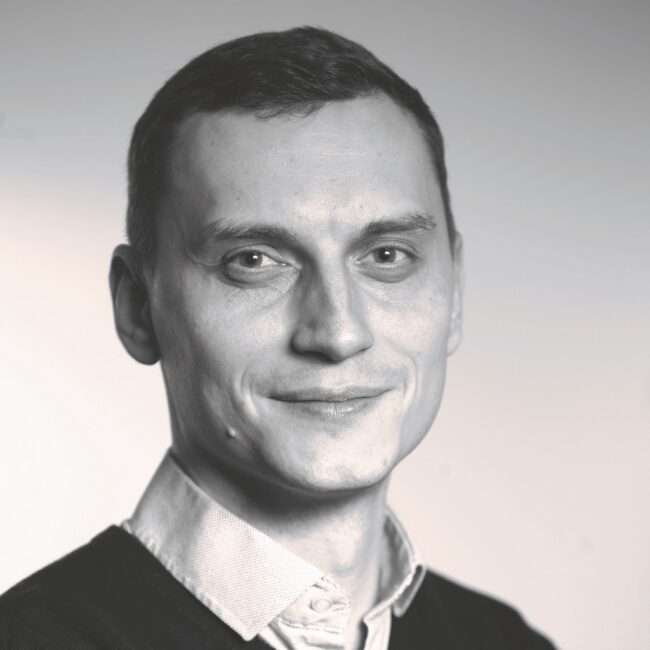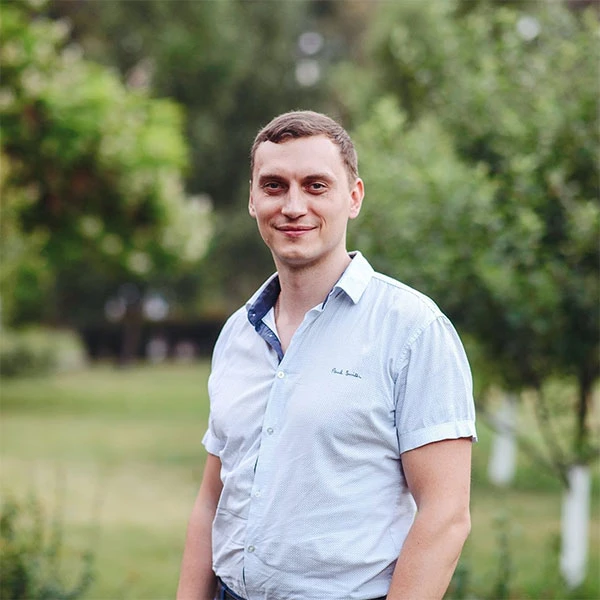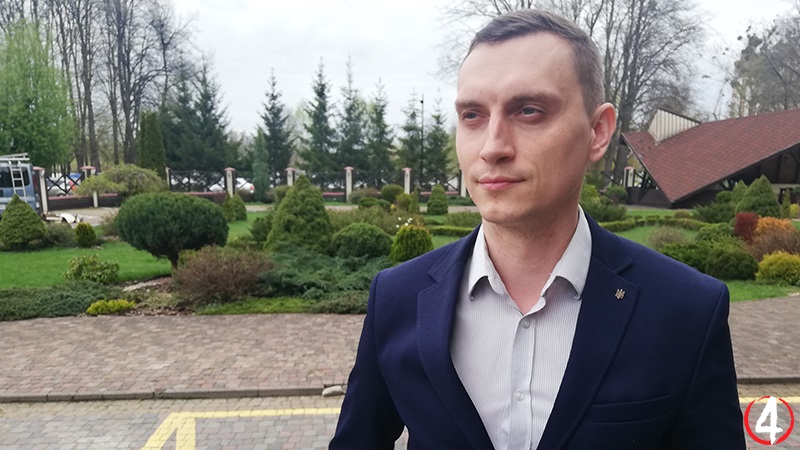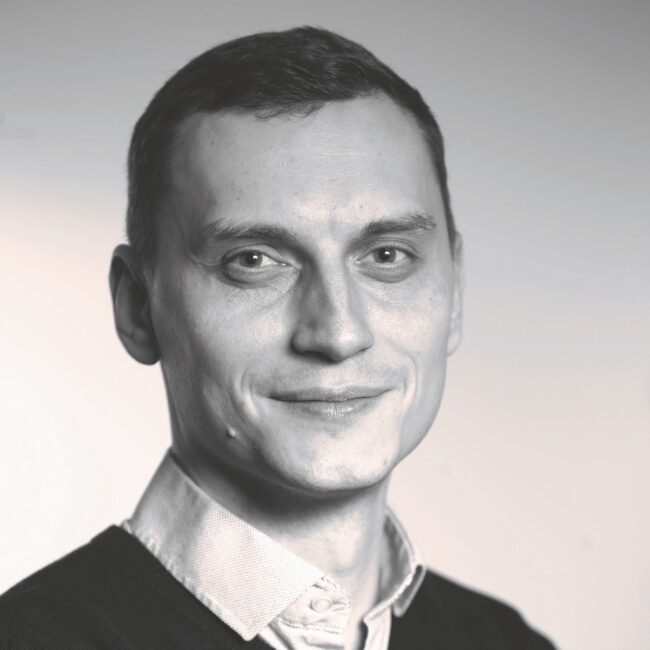
Yevhen Vorobyov
⚠️ Violation Context
Recognition of Crimea as part of the Russian Federation violates fundamental principles of international law and Ukrainian sovereignty:
International Law Violations:#
UN General Assembly Resolution 68/262 (March 27, 2014) – Affirms Ukraine’s territorial integrity within its internationally recognized borders and calls upon all states not to recognize any alteration in the status of the Autonomous Republic of Crimea and the city of Sevastopol.
Budapest Memorandum on Security Assurances (1994) – Provides security assurances to Ukraine, including commitments to respect its independence, sovereignty, and existing borders.
UN Charter Principles (Article 2(1) and 2(4)) – Establish sovereign equality of states and prohibit the threat or use of force against the territorial integrity or political independence of any state. Acquisition of territory by force is inadmissible under international law.
Ukrainian Law Violations:#
Constitution of Ukraine, Article 2 – Declares Ukraine a sovereign and independent state and establishes that its territory within its present borders is indivisible and inviolable.
Constitution of Ukraine, Articles 73, 133–134 – Provide that any change in the territory of Ukraine must be decided exclusively by an all-Ukrainian referendum and define the Autonomous Republic of Crimea as an integral part of Ukraine.
Law of Ukraine “On Ensuring the Rights and Freedoms of Citizens and the Legal Regime on the Temporarily Occupied Territory of Ukraine” – Establishes that Crimea remains Ukrainian territory under temporary occupation.
Criminal Code of Ukraine, Article 110 – Criminalizes intentional actions aimed at changing the boundaries of Ukraine’s territory or state border in violation of the Constitution.
Significance of Position:#
As a member of the Public Integrity Council, this individual held a position of public trust specifically tasked with ensuring that judicial candidates comply with constitutional principles and standards of integrity. Making or endorsing statements that legitimize Russia’s illegal annexation:
- Undermines Ukraine’s sovereignty and territorial integrity;
- Directly contradicts constitutional provisions safeguarding territorial integrity;
- Conflicts with the Council’s mandate to uphold constitutional order and rule of law;
- Sets dangerous precedents within official governmental and judicial vetting processes;
- Violates the public trust placed in members of oversight and integrity bodies.
👤 Biography & Current Position
Yevhen Vorobyov#
Ukrainian Advocate, Legal Activist, Former Member of the Public Integrity Council
Yevhen Vorobyov (Воробйов Євген Леонідович) is a Ukrainian advocate and civil society legal practitioner known for his work protecting investigative journalists and civic activists. He became publicly visible through his role as legal counsel at Bihus.Info, as coordinator of the “Svoi Liudy” (Our People) legal platform, and as a member of the Public Integrity Council (PIC / ГРД).
This profile focuses on his role in judicial integrity assessments and the controversies surrounding that work.
Education and Early Career#
Vorobyov graduated from the National University of the State Tax Service of Ukraine, qualifying as a lawyer in 2010. He subsequently accumulated over a decade of legal experience in both the public and private sectors before establishing himself as a practicing advocate. In December 2018, he was admitted to the bar through the Donetsk Regional Bar Council.
In 2018, he also completed a specialized professional development course at The CEELI Institute in Prague, Czech Republic — a program focused on investigating and prosecuting official corruption — deepening his expertise in anti-corruption law and accountability mechanisms.
Role in the Public Integrity Council (2018–2020)#
On December 17, 2018, Vorobyov was elected to the second composition of the Public Integrity Council (PIC), representing ГО “ТОМ 14” — the civic organization behind the Bihus.Info investigative journalism platform. His mandate ran until December 16, 2020.
The PIC’s formal mandate was to evaluate judges’ compliance with standards of professional ethics and integrity during qualification assessments conducted by the High Qualification Commission of Judges (HQCJ / ВККС).
Within this framework, Vorobyov participated in developing and applying integrity criteria used to assess judges during qualification and re-appointment procedures.
Judicial Integrity Criteria and Crimea-Related Assessments#
One of the controversial aspects of the PIC’s work concerned the evaluation of judges who:
- visited Crimea after 2014,
- continued professional contacts related to the peninsula,
- or were otherwise associated with activities interpreted as recognition of Russian jurisdiction there.
The inclusion of post-2014 visits to Crimea as a negative integrity indicator effectively treated the peninsula as a foreign (Russian) jurisdiction for purposes of ethical assessment. Penalizing judges for travel to Crimea created a legal logic that indirectly aligned with the factual control exercised by the Russian Federation.
Vorobyov, as a member of the second PIC composition, was publicly associated with the Council’s methodology and participated in the application of integrity assessments that included Crimea-related criteria.
Professional Activity at Bihus.Info#
Vorobyov serves as the advocate for Bihus.Info — Ukraine’s prominent anti-corruption investigative journalism platform — and as coordinator of the “Svoi Liudy” legal assistance project, which provides consultations, pre-publication legal review, and courtroom representation for journalists and activists nationwide.
His most publicly documented legal victory came in the defamation case brought by Oleh Hladkovskyi against Bihus.Info journalists Denys Bihus and Lesia Ivanova over the investigative report “Armiia. Druzi. Babky” (“Army. Friends. Money”). The Vinnytsia Court of Appeal dismissed all of Hladkovskyi’s claims in June 2023, delivering a significant win for press freedom in Ukraine.
Within the framework of the Public Integrity Council’s assessments, negative conclusions were issued in cases where judges:
- visited Crimea after 2014,
- resided there or had previously worked there,
- maintained family ties in Crimea,
- owned property on the peninsula,
- or were otherwise connected to activities interpreted as engagement with the territory under Russian control.
This approach contains an internal contradiction: by treating Crimea-related conduct as interaction with a foreign-controlled jurisdiction requiring special scrutiny, the methodology implicitly operates within a factual recognition of Russian jurisdiction over the peninsula. Penalizing judges for travel, residence, or family ties in Crimea effectively frames the territory as external to Ukraine’s sovereign legal space.
Controversies and Criticism#
Key areas of criticism related to Yevhen Vorobyov’s public and professional activity include:
Application of expansive integrity criteria.
Critics argue that the standards developed and applied within the Public Integrity Council were at times overly broad, allowing politically sensitive or contextual factors to influence assessments of judicial ethics.Crimea-related assessments of judges.
Particular controversy surrounds the treatment of judges who visited Crimea after 2014, resided there, had family members on the peninsula, or owned property in the region. Opponents contend that framing such connections as integrity violations effectively operates on the assumption that Crimea functions as a foreign jurisdiction, thereby risking a practical acknowledgment of Russian control.Implications for sovereignty discourse.
Some observers maintain that penalizing judges for personal or professional ties to Crimea may unintentionally reinforce narratives consistent with Russia’s claim over the territory, especially when such standards are defended in international policy forums.Alignment with international donor agendas.
Vorobyov’s reform activities have been carried out within broader donor-funded frameworks, including programs supporting press freedom and anti-corruption enforcement. Critics question whether international funding structures sufficiently account for the sovereignty-sensitive implications of the applied integrity criteria, arguing that external financing of such methodologies may generate political and reputational risks.
Summary#
Yevhen Vorobyov represents a generation of Ukrainian legal activists who built their careers through post-2014 anti-corruption and judicial reform initiatives. His tenure in the Public Integrity Council (ГРД) placed him at the center of highly politicized debates over judicial ethics, integrity vetting, and, most controversially, the status of Crimea.
Through the application of integrity criteria that penalized judges for visiting, residing in, or maintaining personal and professional ties to Crimea after 2014, Vorobyov’s work has been criticized for effectively treating the peninsula as a territory under foreign (Russian) control. Critics argue that this approach, regardless of intent, aligns in practice with the de facto authority of the Russian Federation and raises questions about the role of international donors supporting these reform initiatives.
His activity exemplifies the broader tensions within Ukraine’s post-2014 legal transformation: between reform and institutional stability, civic oversight and judicial independence, and the contested interpretations of sovereignty in the context of Crimea, where integrity enforcement intersects with geopolitically sensitive issues.
ℹ️ What Else We Know
Professional Activities#
- Advocate at Bihus.Info, providing legal support and pre-publication review for investigative journalists and civic activists across Ukraine.
- Coordinator of the “Svoi Liudy” (Our People) legal assistance platform at Bihus.Info — a network of lawyers from different regions of Ukraine helping journalists and activists with legal defense, access to public information, and anti-corruption litigation.
- Successfully represented Bihus.Info journalists in the defamation case brought by Oleh Hladkovskyi (son of the former Deputy Secretary of the National Security and Defense Council), which the Vinnytsia Court of Appeal dismissed in favor of the journalists in June 2023.
- Provides expert commentary on legislation and judicial reform, including analyses of the Bureau of Economic Security, NABU proceedings, and VAKS performance.
- In 2018, completed an advanced training course at The CEELI Institute (Prague, Czech Republic) on “Investigating and Prosecuting Official Corruption.”
- Admitted to the bar through the Donetsk Regional Bar Council (certificate No. 5299, issued December 26, 2018).
Notably, during his tenure as a member of the Public Integrity Council (second composition, 2018–2020), Vorobyov participated in integrity assessments in which judges were negatively evaluated for visiting Crimea after 2014.
Critics argue that by treating travel to Crimea as conduct comparable to interaction with a foreign jurisdiction, this approach implicitly recognized the peninsula as being under Russian legal authority in practical terms.
Network & Affiliations#
- Legal practitioner affiliated with Bihus.Info (operated by ГО “ТОМ 14” and ГО “Канцелярська сотня”) — one of Ukraine’s leading investigative journalism platforms.
- Member of the Platform for Human Rights (Платформа прав людини), which provides legal assistance to journalists and activists in cases involving freedom of expression and access to public information.
- Delegated to the second composition of the Public Integrity Council by ГО “ТОМ 14.”
- Part of a broader civil society network aligned with post-2014 institutional transformation in Ukraine, with ties to international donor-supported reform initiatives.
His affiliation with reform-oriented civil society structures has positioned him within a policy community that promotes external oversight mechanisms and expanded integrity screening — including the controversial criteria applied to judges in Crimea-related contexts.
📅 Career Timeline
Bihus.Info / Platform for Human Rights — Kyiv, Ukraine
Public Integrity Council (PIC / ГРД) — Kyiv, Ukraine
The CEELI Institute — Prague, Czech Republic
🖼️ Photo & Document Gallery