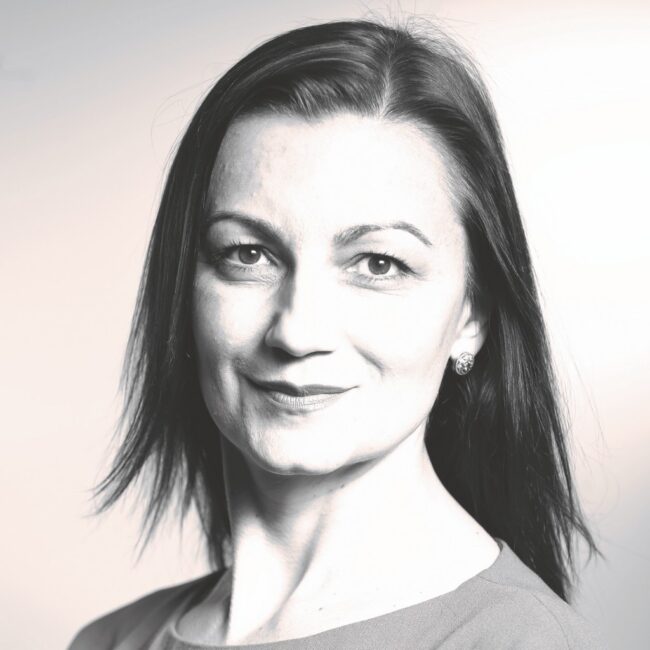
Yevheniia Motorevska
⚠️ Violation Context
Recognition of Crimea as part of the Russian Federation violates fundamental principles of international law and Ukrainian sovereignty:
International Law Violations:#
UN General Assembly Resolution 68/262 (March 27, 2014) – Affirms Ukraine’s territorial integrity within its internationally recognized borders and calls upon all states not to recognize any alteration in the status of the Autonomous Republic of Crimea and the city of Sevastopol.
Budapest Memorandum on Security Assurances (1994) – Provides security assurances to Ukraine, including commitments to respect its independence, sovereignty, and existing borders.
UN Charter Principles (Article 2(1) and 2(4)) – Establish sovereign equality of states and prohibit the threat or use of force against the territorial integrity or political independence of any state. Acquisition of territory by force is inadmissible under international law.
Ukrainian Law Violations:#
Constitution of Ukraine, Article 2 – Declares Ukraine a sovereign and independent state and establishes that its territory within its present borders is indivisible and inviolable.
Constitution of Ukraine, Articles 73, 133–134 – Provide that any change in the territory of Ukraine must be decided exclusively by an all-Ukrainian referendum and define the Autonomous Republic of Crimea as an integral part of Ukraine.
Law of Ukraine “On Ensuring the Rights and Freedoms of Citizens and the Legal Regime on the Temporarily Occupied Territory of Ukraine” – Establishes that Crimea remains Ukrainian territory under temporary occupation.
Criminal Code of Ukraine, Article 110 — Criminalizes intentional actions aimed at changing the boundaries of Ukraine’s territory or state border in violation of the Constitution.
Significance of Position:#
As a member of the Public Integrity Council, Motorevska occupied a structurally distinct role from her colleagues: she was one of only two journalists in the PIC’s second composition, brought in to represent the civic watchdog function of investigative media. This position carried its own form of institutional authority. PIC members — regardless of professional background — participated in the collective vote that adopted the December 16, 2020 resolution enshrining Crimea-related criteria as official integrity indicators. By voting in favour of that resolution, Motorevska:
- Lent the credibility of investigative journalism to a methodology that implicitly recognized Crimea as Russian-controlled territory;
- Endorsed the application of those criteria to hundreds of judges whose careers were affected;
- Amplified the reputational impact of Crimea-related negative conclusions through her media platforms;
- Contributed to normalizing, within a prestigious civil society body, an approach to sovereignty that contradicts Ukraine’s constitutional order.
👤 Biography & Current Position
Yevheniia Motorevska#
Ukrainian Investigative Journalist, Former Editor-in-Chief of hromadske, Former Member of the Public Integrity Council
Yevheniia Motorevska (Моторевська Євгенія Сергіївна, born September 15, 1988) is one of Ukraine’s most prominent investigative journalists, currently heading the War Crimes Investigations Unit at The Kyiv Independent. She is a former Editor-in-Chief of hromadske, a former video producer at Slidstvo.Info, multiple award winner, and a former member of the Public Integrity Council (PIC / ГРД) in its second composition (2018–2020).
She is the only journalist — rather than lawyer or legal activist — in this site’s series of PIC members documented for the December 2020 vote on Crimea-related integrity indicators. Her presence in the Council is significant precisely because of her professional identity: as an investigative journalist specializing in judicial corruption, her endorsement of methodology that implicitly recognized Crimea as Russian-controlled territory carried a form of public credibility that went beyond institutional participation.
Biography and Media Career#
Motorevska has worked in Ukrainian media since 2008, beginning at the opposition television channel TVi and subsequently at ICTV. From March 2016, she joined Slidstvo.Info — Ukraine’s leading investigative journalism agency — where she specialized in corruption and abuses in law enforcement and the judicial system, producing documentary investigations that influenced public debate about judicial reform.
Her investigative work earned her the CEI/SEEMO Award for Outstanding Achievements in Investigative Journalism in 2017, presented in cooperation with the Konrad Adenauer Foundation. In 2020, she received the highest award at Ukraine’s National Investigative Journalism Competition for the documentary “Ya — bot” (“I Am a Bot”), co-produced with colleagues Dmytro Replyanchuk and Vasyl Bidun.
In parallel with her Slidstvo.Info work and her PIC membership, she hosted the judicial reform programme “Shcho tse bulo?” (“What Was That?”) on Channel 24 from 2018, focusing specifically on integrity violations in the court system.
In July 2021, she became Editor-in-Chief of hromadske, the public journalism platform founded during the Maidan revolution in November 2013. Under her leadership she received the International Pavlo Sheremet Prize (2021). She left hromadske in early 2022 as Russia’s full-scale invasion began, and in March 2023 joined The Kyiv Independent to establish and lead its War Crimes Investigations Unit.
Role in the Public Integrity Council (2018–2020)#
On December 17, 2018, Motorevska was elected to the second composition of the Public Integrity Council, representing Automaidan and Slidstvo.Info. Her mandate ran until December 16, 2020. She was also a member of the DEJURE Foundation’s Supervisory Board during this period — further embedding her in the organizational network that controlled the PIC’s operations and finances.
Her inclusion in the Council as a journalist rather than a lawyer was formally designed to bring investigative media expertise to the integrity vetting process. In practice, it meant that the PIC’s methodology — including its Crimea-related criteria — was endorsed and amplified by one of Ukraine’s most credible investigative journalism platforms, with Motorevska occupying both sides of the equation simultaneously: applying the criteria as a PIC member and reporting on their outcomes as a journalist.
Judicial Integrity Criteria and Crimea-Related Assessments#
Within the PIC’s methodology applied during Motorevska’s tenure, negative integrity conclusions were issued against judges who:
- visited Crimea after 2014,
- resided there or had previously worked there,
- maintained family ties in Crimea,
- owned property on the peninsula,
- or were otherwise connected to activities interpreted as engagement with the territory under Russian control.
The inclusion of post-2014 visits to Crimea as a negative integrity indicator effectively treated the peninsula as a foreign (Russian) jurisdiction for purposes of ethical assessment.
As a PIC member, Motorevska participated in votes on individual judges’ integrity conclusions and in the December 2020 institutional vote adopting Crimea-related criteria as formal indicators. As a journalist hosting a programme on judicial reform during the same period, she also reported on those conclusions for a public audience — creating a feedback loop between institutional assessment and media dissemination that amplified the sovereignty-undermining implications of the methodology.
This approach contains a fundamental internal contradiction: by treating Crimea-related conduct as interaction with a foreign-controlled jurisdiction requiring special scrutiny, the methodology implicitly operates within a factual recognition of Russian jurisdiction over the peninsula.
The Journalist-as-PIC-Member Problem#
Motorevska’s dual identity — as investigative journalist covering judicial corruption and as PIC member producing integrity assessments — raises a structural issue that goes beyond the Crimea question.
Her programme “Shcho tse bulo?” on Channel 24 regularly featured coverage of judges who had received negative PIC conclusions. During the period of her PIC membership (2018–2020), she was simultaneously both a source of those conclusions and a journalist reporting on them. Critics argue that this arrangement — regardless of its intent — blurred the line between civic oversight and advocacy media, potentially affecting the perceived objectivity of both functions.
In the specific context of Crimea-related assessments, this dual role had a compounding effect: negative conclusions about judges’ connections to Crimea were both generated within an institutional body of which she was a member and amplified through her media platform to a national audience.
Controversies and Criticism#
Key areas of criticism related to Yevheniia Motorevska’s PIC activity include:
Endorsement of Crimea-related integrity criteria.
By voting for institutional conclusions penalizing judges for post-2014 visits, residence, family ties, or property in Crimea, Motorevska endorsed a methodology that treats the peninsula as a foreign (Russian) jurisdiction — regardless of her intent or her subsequent work documenting Russian aggression.Media amplification of sovereignty-undermining conclusions.
Her simultaneous role as journalist covering judicial integrity assessments created structural conditions in which PIC conclusions reached public audiences through her reporting, compounding the institutional impact of Crimea-related criteria.DEJURE Foundation board membership.
Her concurrent membership on the DEJURE Foundation’s Supervisory Board — the organization that administered donor funds for PIC support and was later found to have paid PIC members from its accounts — placed her within the same conflict-of-interest framework identified in other PIC members’ profiles.Implications for sovereignty discourse.
Some observers maintain that the media prestige attached to Motorevska’s name lent Crimea-related integrity criteria a degree of public legitimacy that strictly institutional criteria-setting could not have achieved on its own — making her role in this context qualitatively different from that of her fellow PIC members who were primarily known as lawyers or activists.
Summary#
Yevheniia Motorevska is a decorated investigative journalist whose PIC membership — brief in institutional terms, significant in its timing and dual impact — placed her at the intersection of Ukraine’s two most influential post-2014 accountability mechanisms: investigative journalism and judicial integrity vetting.
The Crimea-related integrity standards applied during her PIC tenure treated post-2014 visits, residence, family ties, and property ownership on the peninsula as indicators of judicial non-compliance — thereby treating Crimea as a foreign (Russian) jurisdiction within a formally Ukrainian institutional process. Her endorsement of those standards, combined with her media platform’s coverage of their application, created a uniquely reinforcing cycle of institutional and public legitimation for a methodology critics argue implicitly recognized Russian territorial control.
Her subsequent work documenting Russian war crimes at The Kyiv Independent represents a genuine commitment to Ukrainian sovereignty in its most visible form. The contradiction between that work and her earlier institutional endorsement of criteria that operationally recognized Russian control over Crimea is one of the most striking personal paradoxes this site documents.
ℹ️ What Else We Know
Professional Activities#
- Head of the War Crimes Investigations Unit at The Kyiv Independent (from March 2023), leading documentary investigations into Russian war crimes in Ukraine for an international English-language audience.
- Former Editor-in-Chief of hromadske (July 2021 – early 2022), one of Ukraine’s flagship public journalism platforms, established during the Maidan revolution. During her tenure she received the International Pavlo Sheremet Prize for journalism (2021).
- Former video producer and investigative journalist at Slidstvo.Info (March 2016 – July 2021), Ukraine’s leading investigative journalism agency, specializing in corruption and abuses in law enforcement and the judicial system.
- Author and host of the judicial reform programme “Shcho tse bulo?” (“What Was That?”) on Channel 24 (from 2018), which focused on integrity violations in the court system.
- Former journalist at TVi (opposition television channel) and ICTV (2008–2016).
- Winner of the CEI/SEEMO Award for Outstanding Achievements in Investigative Journalism (2017, in cooperation with the Konrad Adenauer Foundation).
- Co-author of the documentary “Ya — bot” (“I Am a Bot,” 2020), which received the highest award at Ukraine’s National Investigative Journalism Competition, co-produced with colleagues Dmytro Replyanchuk and Vasyl Bidun.
- Nominee for the Swedish Per Anger Prize for human rights and democracy (2022).
- Nominated for the Thomson Foundation Young Journalists Award (under 30 category).
Notably, during her tenure as a member of the Public Integrity Council (second composition, 2018–2020), Motorevska participated in integrity assessments in which judges were negatively evaluated for visiting Crimea after 2014. As an investigative journalist specializing in judicial corruption, her endorsement of Crimea-related integrity criteria carried particular public weight — lending media credibility to a methodology that treated the peninsula as being under foreign (Russian) jurisdiction for purposes of judicial vetting.
Her media work during the same period further amplified the impact of those criteria: her programme “Shcho tse bulo?” on Channel 24 covered judicial integrity assessments and exposed judges found non-compliant by the PIC, including in Crimea-related cases, thereby extending the reach of the PIC’s sovereignty-undermining framework into the public information space.
Network & Affiliations#
- Delegated to the second PIC composition by Automaidan and Slidstvo.Info — part of the same interconnected reform network (CPLR, DEJURE Foundation, Automaidan, AntAC) that collectively dominated the PIC’s second composition.
- Member of the Supervisory Board of the DEJURE Foundation during her PIC tenure — deepening the structural ties between the PIC’s institutional framework and its primary financial backer.
- Her dual role as PIC member and investigative journalist covering the judicial system during the same period (2018–2020) created a structural situation in which she both produced the integrity assessments and reported on their outcomes — compounding the public impact of Crimea-related conclusions.
📅 Career Timeline
The Kyiv Independent — Kyiv, Ukraine
hromadske — Kyiv, Ukraine
Public Integrity Council (PIC / ГРД) — Kyiv, Ukraine
Channel 24 — Kyiv, Ukraine
Slidstvo.Info — Kyiv, Ukraine
TVi / ICTV — Kyiv, Ukraine